African perspectives, Indigenous Knowledge Systems (IKS), and youth-led scholarship are taking centre stage in international health discourse as emerging researchers from the African Institute in Indigenous Knowledge Systems (AIIKS) with its hub at the University of KwaZulu-Natal, South Africa, represent the continent in Germany.
Accompanied by AIIKS Research Manager Dr. Mayashree Chinsamy, emerging researchers Blair Vollenhoven and Mandy Modjadji are participating in the 8th International Young Researchers’ Symposium on Global Health in Berlin, Germany, a prominent satellite symposium of the World Health Summit 2026. Hosted by Akkon University for Human Sciences, in Berlin, alongside its Institute for Research in International Assistance (IRIA), the gathering offers an influential platform for early-career scholars to engage directly with pressing global health issues. For AIIKS and its network of partner institutions across Africa, the symposium represents an opportunity to introduce indigenous epistemologies, community-based methodologies, and African-centred paradigms into the global healthcare knowledge economy.
Reimagining One Health Through Ubuntu and Ukama
At the heart of the AIIKS presentation is a paradigm shift in how the international community approaches the "One Health" framework, traditionally understood through Western biomedical integration of human, animal, and environmental health. The AIIKS delegation expands this framework by embedding it within indigenous philosophies, particularly Ubuntu ("I am because we are") and Ukama (the relational kinship binding humans, animals, the Earth, and ancestral domains). Under this lens, planetary health is not a transactional ecosystem to manage, but an interconnected relational continuum.
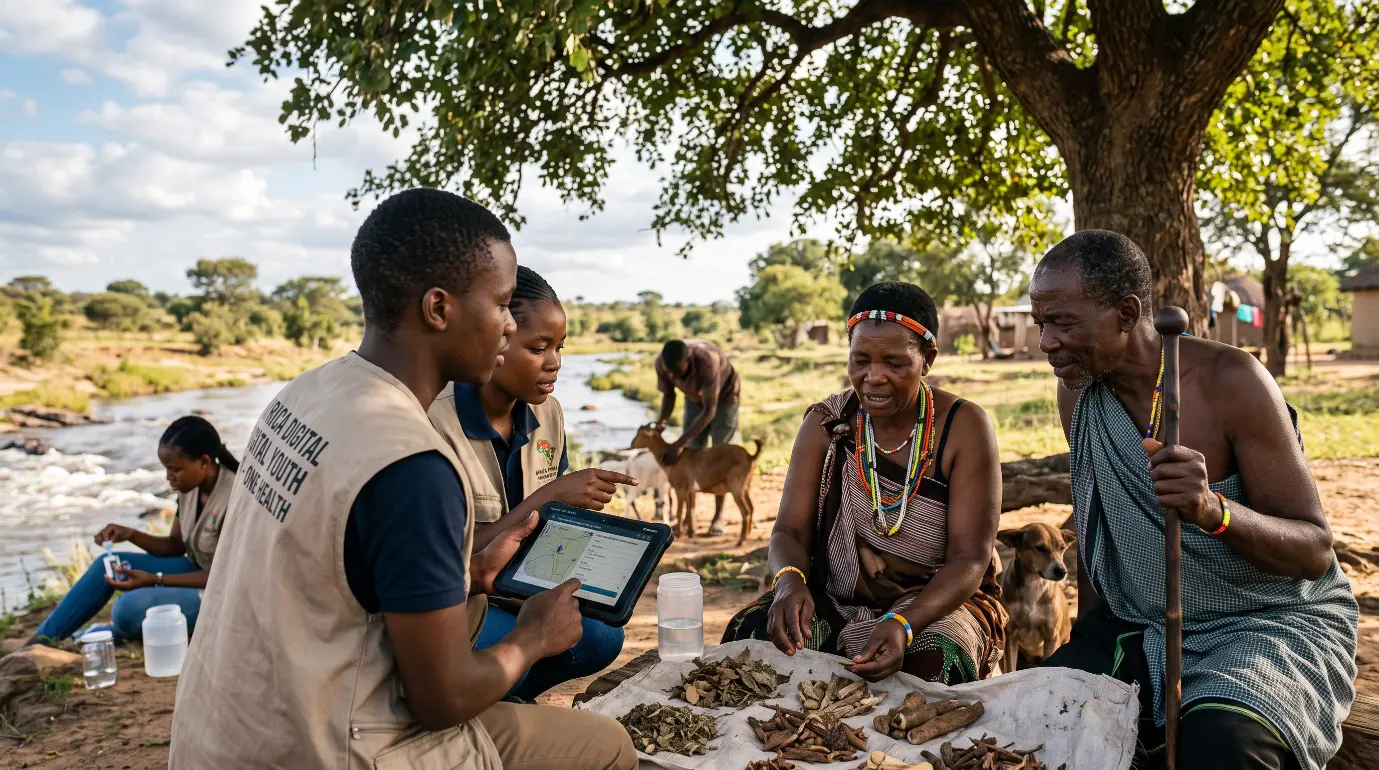
Blair Vollenhoven’s research, titled "Digital Youth in Southern Africa Driving African Traditional Medicine in Indigenous One Healthcare for Climate Resilience," illustrates how Southern African youth are operationalizing these principles. Drawing from lived experiences across diverse biomes and cultural contexts, Vollenhoven argues that African Traditional Medicine (ATM) serves as foundational community-level health infrastructure rather than an alternative or secondary therapy.
Because rural pastoralists regularly employ shared botanical formulas for human and livestock conditions, ethnoveterinary and human therapeutic practices exist along a single, unbroken continuum. Traditional Health Practitioners (THPs) act as frontline ecological observers and early-warning sentinels, detecting epidemiological shifts weeks before conventional rural clinics register an outbreak. Vollenhoven proposes linking these traditional healers with technologically literate youth to establish robust, community-led health surveillance that responds effectively to climate volatility.
Digital Youth as Intergenerational Knowledge Brokers
With 60% of Sub-Saharan Africa’s population under the age of 25, prevailing narratives often mischaracterize African youth as disconnected from local community traditions. Vollenhoven’s findings challenge this stereotype, revealing a generation deeply grounded in cultural lineage while simultaneously adept in open-source tools, mobile literacy, and grassroots organizing.
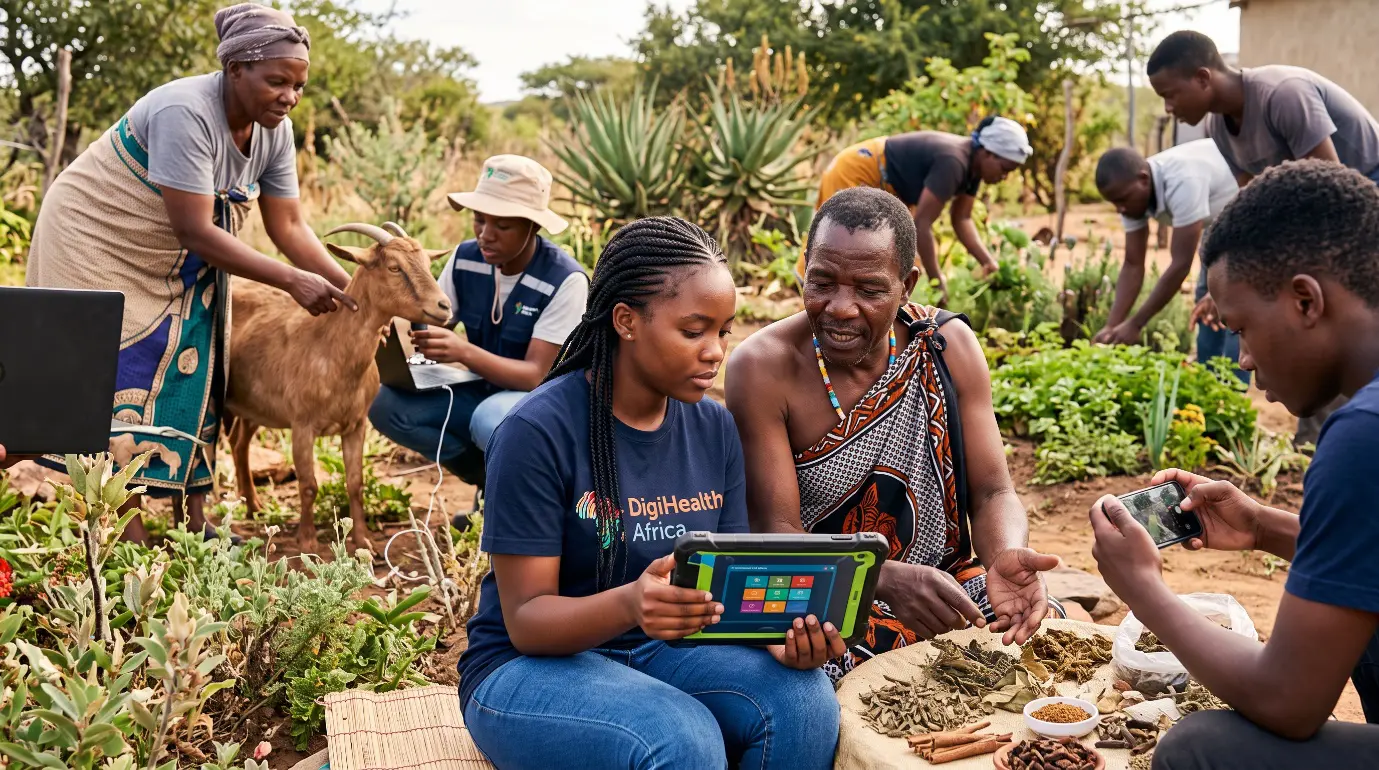
Armed with low-cost Android smartphones and localized communication networks, African young researchers function as intergenerational knowledge brokers. Rather than displacing elders, youth collaborate with THPs to digitize botanical knowledge systems, deploy mobile geospatial mapping to trace bio cultural, linguistic and spiritual diversity changes, and develop early warning systems.
Crucially, this digital integration is governed by decolonial ethics:
• Cognitive Justice: Affirming African Traditional Medicine as empirical, systematic science rather than unverified folklore.
• Indigenous Data Sovereignty & CARE Principles: Prioritizing Collective benefit, Authority to control, Responsibility, and Ethics over uncritical open-science frameworks that expose local remedies to commercial biopiracy.
• Socio-Ecological Resilience: Treating indigenous heritage as an adaptive, localized repository of knowledge that buffers communities against climate shocks.
Decolonizing Food Systems: The Batswana Perspective
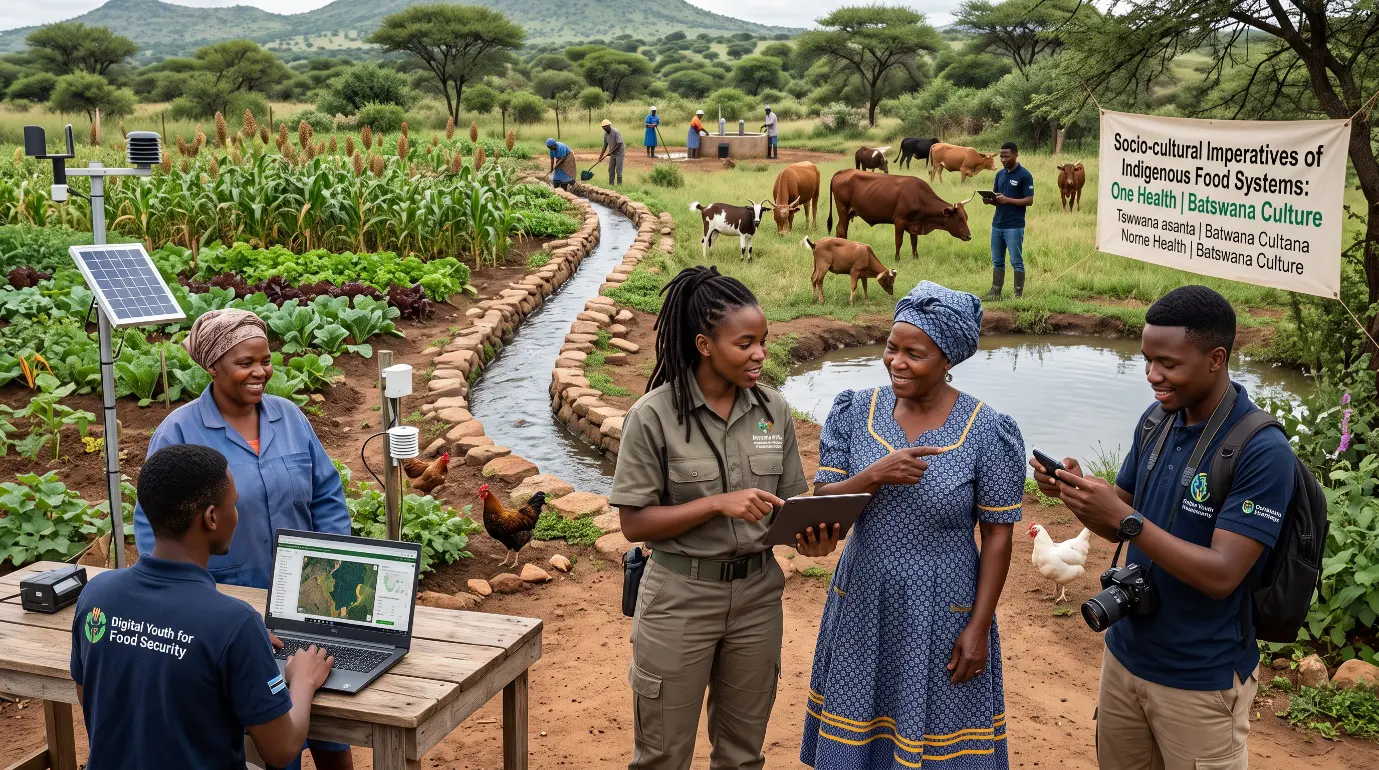
Complementing Vollenhoven’s focus on medicinal surveillance, Mandy Modjadji explores indigenous agroecology in her paper, "Socio-cultural Imperatives of Indigenous Food Systems with special reference to the Batswana in South Africa." Modjadji examines indigenous nutrition not merely as dietary intake, but as a holistic, living system shaped by culture, kinship, and ecological stewardship.
Mainstream public health approaches often reduce traditional food crops to biochemical constituents, measuring only vitamins and minerals while ignoring the socio-ecological protocols that sustain them. Modjadji terms this practice epistemic extraction: harvesting nutrient data while disregarding the knowledge and innovation systems, seasonal ceremonies, and environmental including land ethics that gave rise to those crops. When public interventions separate nutritional value from cultural, linguistic and spiritual context, they systematically fail the local communities they are designed to support.
Modjadji organizes her analysis around three integrated imperatives: 1. Biological Imperatives (Agrobiodiversity and Climate Adaptation)
Indigenous African grains and legumes such as bambara groundnuts, sorghum, fonio, and cowpeas, demonstrate natural drought resilience and soil-rehabilitating qualities. Youth researchers employ Geographic Information Systems (GIS), open-access agronomic databases, and mobile applications to map heirloom seed varieties, preserving vital crop traits against modern industrial monoculture.
2. Socio-Cultural Imperatives (Gender Equity and Transmission)
Indigenous food systems reflect communal organization and gender complementarity. Among the Batswana and related Southern African communities, women traditionally curate wild leafy vegetables, grains, and legumes, preserving intergenerational knowledge around fermentation, timing, and sacred preparation. Men oversee livestock welfare and animal husbandry.
Modern digital platforms allow youth to preserve these oral histories through video documentation, while interactive media and digital cooking series dismantle the stigma that native crops are "poverty foods." Furthermore, digital agritech platforms connect female rural farmers directly to local markets, bypassing intermediaries and securing economic autonomy.
3. Spiritual Imperatives (Cosmic Connectedness and Food Sovereignty)
Within the African worldview, land and water bodies are revered as ancestral environments rather than inert resources for industrial exploitation. Modjadji demonstrates how young creators leverage digital storytelling, podcasts, and community campaigns to assert food sovereignty as a fundamental spiritual right, rejecting purely capitalistic agricultural models in favour of sustainable, respectful human-nature relationships.
Championing Epistemic Justice on the World Stage
The participation of Vollenhoven and Modjadji at Akkon University’s symposium in Berlin underscores a shared objective: achieving epistemic justice and global cognitive democracy. By presenting the interconnected realities of ATM and African indigenous food systems, these emerging scholars prove that African Indigenous and Innovation Systems and contemporary digital tools can operate in tandem.
As global health leaders confront accelerating climate change, emergent zoonotic diseases, and food insecurity, the insights brought forward by AIIKS emphasize that sustainable solutions already exist within grassroots communities. Through respectful intergenerational partnerships, robust data sovereignty, and youth innovation, African Indigenous Knowledge Systems offer practical frameworks for building an equitable, climate-resilient global healthcare architecture.
✕UNESCO Category 2 Centre (C2C)
In UNESCO terminology, a "c2c" (Category 2 Centre) refers to an institution that is associated with UNESCO but is not legally part of it. Funded by the host Member States, these centres act as international or regional hubs of expertise that advance UNESCO’s strategic goals through research, training, and knowledge sharing. The entry of the African Institute in Indigenous Knowledge Systems (AIIKS) into UNESCO Category 2 Centre (C2C) status transforms it from a South African body into a continental and international hub for local knowledge and innovation systems. Based at the University of KwaZulu-Natal (UKZN), South Africa, this status shapes how African science, culture, and laws are handled globally.
Learn more about AIIKS’s UNESCO C2C status →
We use a strictly-necessary session cookie to run this site (Protecting our forms and remembering this choice). We do not use analytics or advertising cookies. Some pages embed videos, which can set their own cookies only if you choose "Accept All."
Read our Privacy Policy
Stay Connected
AIIKS Global Hub
Transforming Knowledge Systems