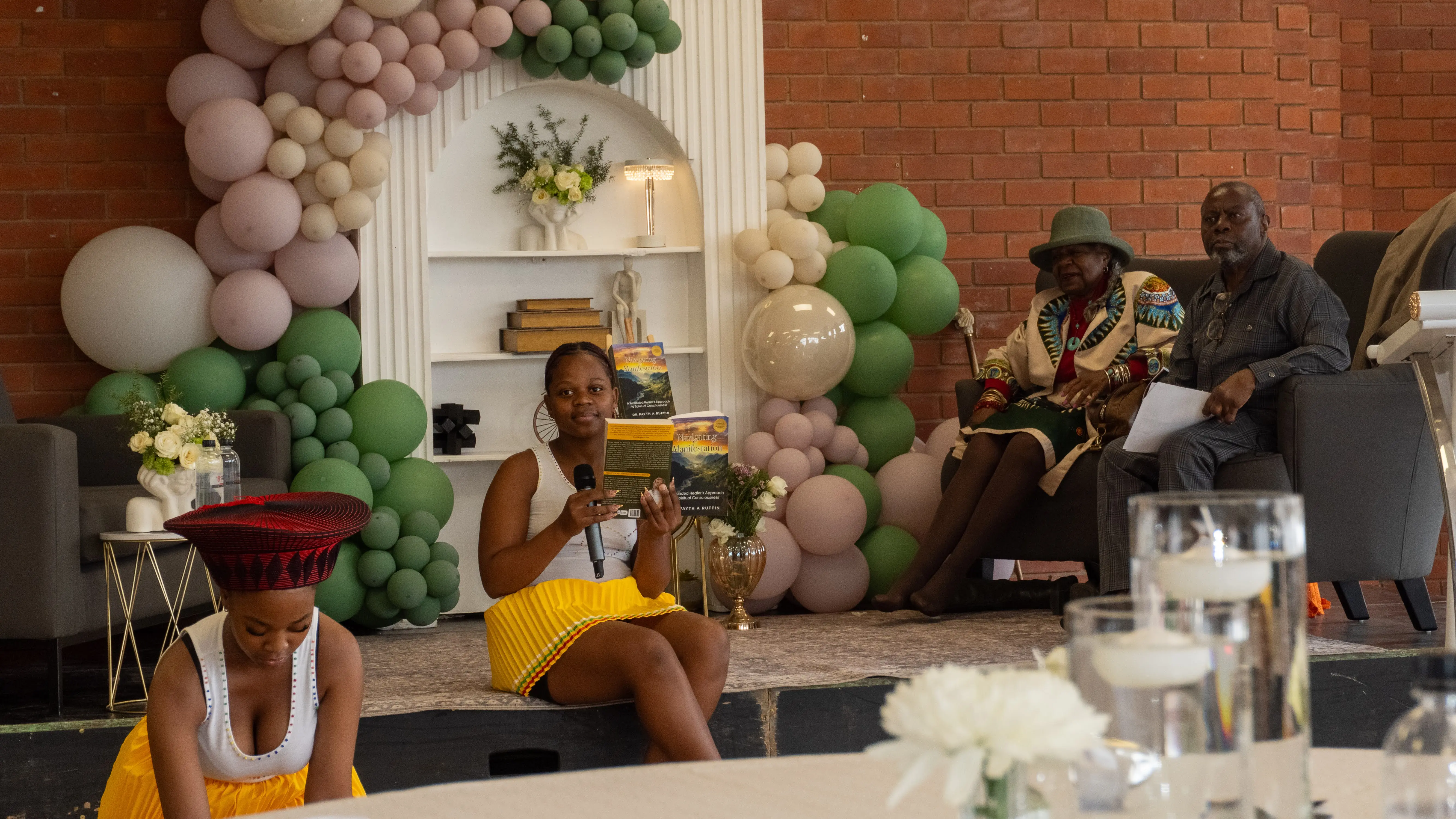
On Friday, 4 September 2026, the African Institute in Indigenous Knowledge Systems (AIIKS) with its hub at the University of KwaZulu-Natal (UKZN), South Africa, facilitated a gathering of scholars, traditional practitioners, students, and community elders to confront that question. The occasion was the launch of Navigating Manifestation: A Wounded Healer’s Approach to Spiritual Consciousness by Dr Fayth Ruffin: scholar, legal mind, initiated Yoruba Lukumi priestess, diviner, and Professor at UKZN.
Moderated by AIIKS, the dialogue traversed conventional academic discourse, establishing an uncompromised convergence between African spirituality, living archives, and epistemic liberation.
Beyond Eurocentric Hegemony: The Search for Epistemic Freedom
For centuries, Western modernity and religious imperialism delegitimized African ways of knowing. Under the banner of the colonial civilizing mission, early African civilizational science, from the Nile Valley to Great Zimbabwe, was systematically severed from its continental roots, while ancestral communion was mislabelled as heresy.
Dr Ruffin’s Navigating Manifestation dismantles these historical erasures. Describing herself as an open channel and "message giver" whose writings were directly guided by the spirit world, Dr Ruffin repositions the wounded healer not as a figure of pathology, but as an instrument of cognitive justice.
Epistemic freedom requires more than critiquing dominant Eurocentric canons; it demands active space for multiple, co-existing realities. As the AIIKS moderation emphasized, recognizing ancestral presence in scholarship is not metaphorical, it is an ontological reality essential to decolonizing African institutions.
Walking the Chapters: From Cincinnati Borderlands to Southern African Soil
The moderation guided the audience through the eight chapters of Navigating Manifestation, tracing an unbroken ancestral thread that defies linear geography and chattel slavery. It explores an eight-chapter journey from ancestral trauma to epistemic liberation. The narrative begins by exploring past-life memories, extrasensory perception, and the heart’s epistemic holding spaces against Eurocentric erasures. It then examines personal coping channels and the legacy of partus sequitur ventrem through Kentucky roots. A vital turning point reclaims Ndwandwe lineage via uBaba Mkhulu, transmuting historical wounds into freedom. Through Yoruba Lukumi priesthood, academia, and cancer survival, spiritual alignment sustains the author. Ultimately, the work formalizes seven steps for institutional shapeshifting toward cognitive justice, culminating in Ubuntu-centred Divine Creativity, African Sacred Science, and liberating cyclical time.
1. Transmuting Historical Trauma into "Ourstory"
Beginning in Chapter One, the discussion addressed Walnut Hills in Cincinnati, Ohio, a contested 19th-century legal borderland facing slaveholding Kentucky. Dr Ruffin explored the parapsychology of extrasensory perception (ESP) and the profound question of soul selection: how conscious souls select their families from the spirit world, voluntarily entering lineages marked by systemic violence under the oppressive economic-political apparatus she terms "the Conglomerate."
This exploration deepened in Chapter Four, which unpacked the brutal legal doctrine of partus sequitur ventrem, under which enslaved children inherited the legal status of their mothers and showed how ancestral memory heals these institutional ruptures.
2. Reclaiming Southern African Lineages
In Chapter Five, the narrative shifted across oceans to Southern Africa and the Ndwandwe nation. Dr Ruffin recounted discovering uBaba Mkhulu, a spiritual ancestor and pillar of her Divine Collective whose presence manifested following her relocation to South Africa. Anchored by her mother’s preserved 1928 diaries, this revelation traced the long reach of the East African slave trade, transmuting historic wounds into instruments of collective renewal.
Vulnerability in Institutional Spaces
Chapters Three and Six laid bare the personal costs of spiritual alignment. Dr Ruffin chronicled her initiation into the Yoruba Lukumi tradition, her legal career, and her battle with cancer, detailing how ancestral guidance sustained her through surgery and recovery.
Opening oneself to ancestral guidance within rigid corporate and academic structures demands vulnerability. Rather than abandoning her spiritual identity to fit Eurocentric scholarly moulds, Dr Ruffin integrated her priesthood into her legal and pedagogical practice, recognizing Jesus as an honoured ancestor within an expansive spiritual cosmology.
Seven Steps for Shapeshifting Toward Cognitive Justice
A core contribution of the launch was Chapter Seven’s roadmap for institutional transformation. Dr Ruffin outlined her Seven Steps for Shapeshifting Toward Epistemic Freedom, offering practical interventions against corporate and institutional monopolies:
• Cognitive Justice-Infused Curricula: Embedding indigenous philosophies, ancestral methodologies, and local ecological knowledge directly into university classrooms.
• Structural Pluralism in Governance: Dismantling rigid Eurocentric hierarchies in favour of consultative, communal administration.
• Communalistic Entrepreneurship: Aligning economic innovation with collective well-being rather than exploitative capital accumulation.
• African Gender Complementarity: Rejecting Western patriarchal binaries by restoring indigenous models of spiritual, institutional, and communal balance.
Non-Linear Time, Ubuntu, and African Sacred Science
The session culminated in the philosophical terrain of Chapter Eight: contrasting Divine Creativity (macrocosmic group consciousness) with Creative Divinity (microcosmic individuation consciousness rooted in Ubuntu).
Dr Ruffin addressed why spiritual labour causes persistent physical and emotional "bleeding." Writing channelled truth while living within an ongoing coloniality requires continuous emotional transmutation; alignment with ancestors does not eliminate pain, but gives it purpose.
The dialogue concluded with an analysis of African Sacred Science and temporality. By liberating time from a commodified, industrial clock and restoring it as cyclical, relational, and event-driven, indigenous worldviews provide an alternative to extractive capitalism.
An Unbroken Circle
The book launch of Navigating Manifestation served as a living demonstration of cognitive justice in practice. By hosting this dialogue, AIIKS reaffirmed its mandate as a UNESCO Category 2 Centre: preserving indigenous knowledge and innovation systems, validating alternative epistemologies, and asserting that the bridge between scholarship and ancestral wisdom remains open.
Dr Fayth Ruffin’s work reminds us that healing is not passive introspection, it is a decolonial act. Reclaiming ancestral memory breaks the monopoly on what counts as truth, restoring the sacred circle of human consciousness.
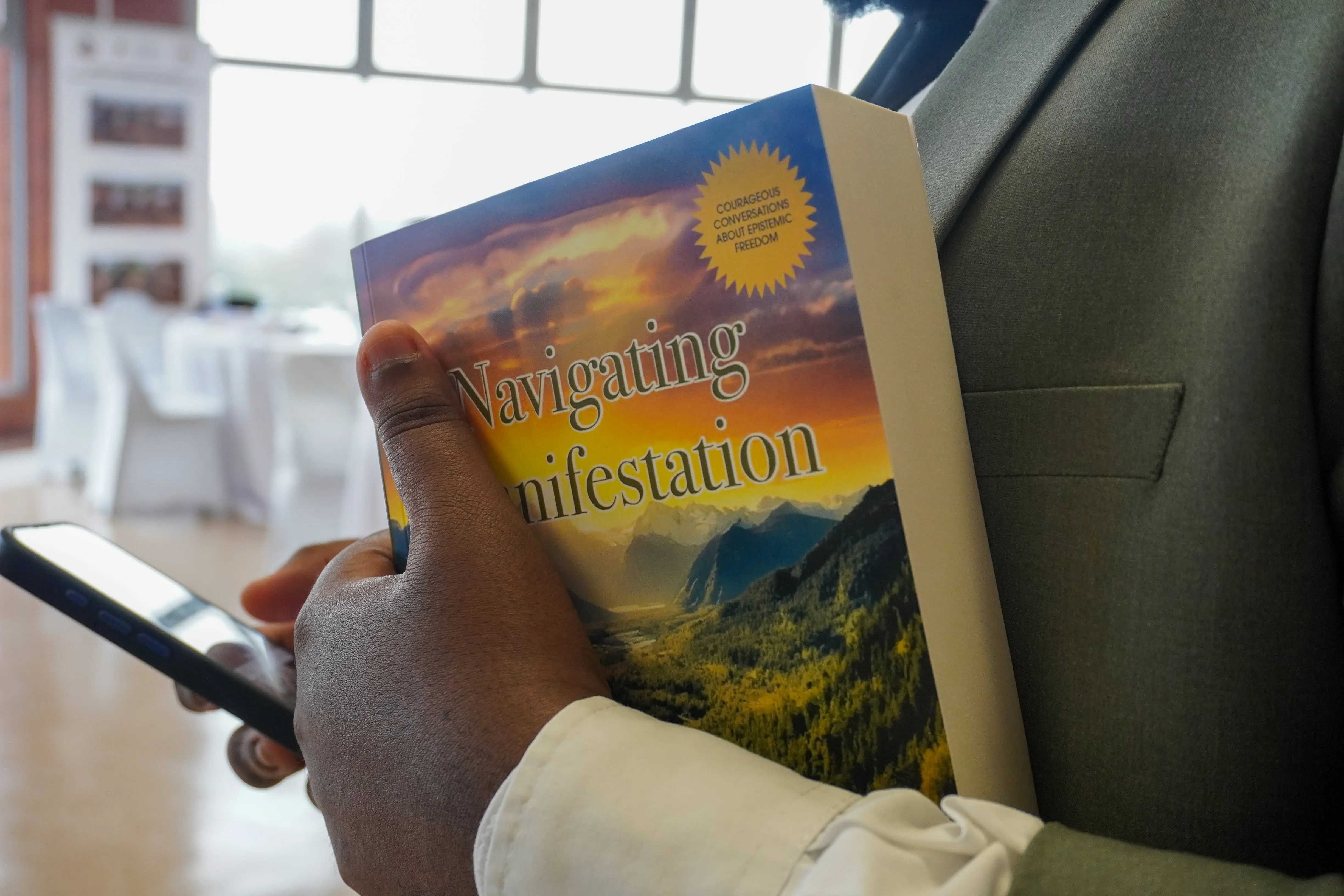
Navigating Manifestation: A Wounded Healer’s Approach to Spiritual Consciousness by Dr.F. Ruffin
✕UNESCO Category 2 Centre (C2C)
In UNESCO terminology, a "c2c" (Category 2 Centre) refers to an institution that is associated with UNESCO but is not legally part of it. Funded by the host Member States, these centres act as international or regional hubs of expertise that advance UNESCO’s strategic goals through research, training, and knowledge sharing. The entry of the African Institute in Indigenous Knowledge Systems (AIIKS) into UNESCO Category 2 Centre (C2C) status transforms it from a South African body into a continental and international hub for local knowledge and innovation systems. Based at the University of KwaZulu-Natal (UKZN), South Africa, this status shapes how African science, culture, and laws are handled globally.
Learn more about AIIKS’s UNESCO C2C status →
We use a strictly-necessary session cookie to run this site (Protecting our forms and remembering this choice). We do not use analytics or advertising cookies. Some pages embed videos, which can set their own cookies only if you choose "Accept All."
Read our Privacy Policy
Stay Connected
AIIKS Global Hub
Transforming Knowledge Systems