UKZN Students Selected for Prestigious Germany-South Africa Global Exchange Programme on Climate Change and Traditional Healing Systems
The African Institute in Indigenous Knowledge Systems (AIIKS), - with its hub at the University of KwaZulu-Natal (South Africa) and The Institute for Research in International Assistance (IRIA) at Akkon University of Human Sciences (Germany), is proud to celebrate the selection of two outstanding postgraduate students who will participate in the Engagement Global ASA-Program 2026: South Africa.
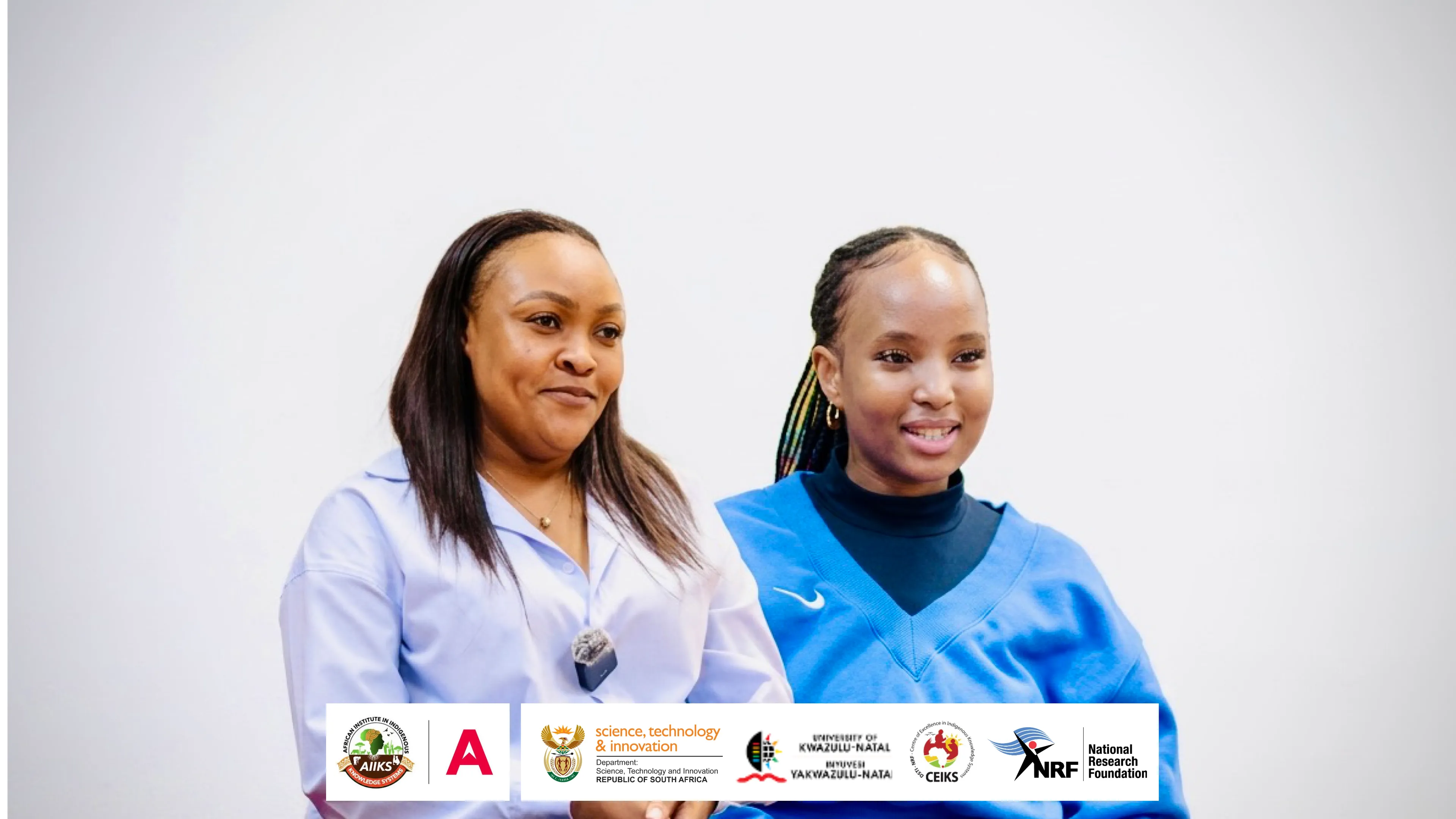
Ms Rayleen Row and Ms Vuyiswa Nyawose will travel to Germany from May to July 2026, as part of an international academic collaboration focused on climate change and its impact on traditional medicine systems a critical, complex and timely challenge at local and global levels.
The official title of the programme is:
Climate Change Impacts on Diverse Traditional Medicine and Healing Systems Across Generations: Comparative Experiences from Germany and South Africa
This initiative creates an important platform for intercultural exchange, collaborative research, and youth leadership development between students from South Africa and Germany. It also recognises the growing global importance of Indigenous knowledge systems, particularly in the fields of health systems, sustainability, environmental resilience, social and climate justice. This initiative demonstrates the Institute’s and UKZN’s commitment to advancing globally relevant, socially responsive research, by foregrounding the importance of Indigenous Knowledge Systems (IKS) in addressing contemporary global challenges.
Addressing Climate Change Through Indigenous Knowledge Systems
Climate change continues to reshape ecosystems, alter biodiversity, and place pressure on communities that depend on medicinal plants, ancestral healing knowledge systems, and traditional wellness practices. In many local communities, traditional medicine remains a vital part of healthcare delivery, deeply rooted in intergenerational knowledge, biodiversity, and cultural heritage.
This programme seeks to understand how climate-induced environmental changes is are impacting traditional healing systems across different socio-cultural contexts in both South Africa and Germany. It further interrogates how younger generations engage with, adapt, and sustain these knowledge systems within rapidly evolving global environments.
Through structured academic engagement, including workshops, collaborative research activities, field visits, and academic dialogue, participating students will critically examine the similarities and differences between both countries’ experiences. The programme also seeks to contribute to broader scholarly and policy discussions on the preservation, protection, and adaptation of Indigenous healing knowledge in the face of climate uncertainty.
Meet the Students Representing UKZN
Rayleen Row
Rayleen Row, currently pursuing a Master of Medical Science degree, brings a strong interdisciplinary background in biomedical sciences and a growing passion for public health and preventative care research. Her academic journey reflects a commitment to understanding health not only at a cellular level, but bridging molecular science with environmental, social, and cultural determinants of wellbeing.
Her previous research in medical biochemistry and haematology strengthened her skills in laboratory methodology, diagnostics, and data analysis. However, through these experiences, she developed a deeper interest in preventive healthcare, health equity, and the integration of diverse knowledge systems to improve population wellbeing.
Rayleen has also gained practical exposure through research placements at Harry Gwala Regional Hospital and the Umkhuseli Innovation and Research Management Centre, where she observed the importance of community-engaged research and innovative healthcare solutions in South Africa.
She views this Engagement Global ASA-Program 2026: South Africa research exchange programme as an opportunity to combine scientific training with indigenous knowledge systems perspectives, while learning from German traditional healing practices and conservation approaches. Her enthusiasm for intercultural learning and multidisciplinary collaboration makes her a valuable representative of UKZN.
Vuyiswa Nyawose
Vuyiswa Nyawose, pursuing a master's in nursing student, is an accomplished healthcare professional whose experience spans clinical practice, research, quality improvement, and health systems strengthening. She holds a Bachelor’s degree in Nursing, a Postgraduate Diploma in Clinical Nursing Science, Health Assessment, Treatment and Care, as well as certification in monitoring, evaluation, and research skills.
Throughout her career, she has served in several leadership and technical roles, including Project Manager for Quality Improvement, District Site Manager, Clinical Advisor, Nurse Clinician, and Research Nurse. These positions have equipped her with extensive knowledge of healthcare systems, service delivery improvement, stakeholder engagement, and multidisciplinary teamwork. She brings to the programme a critical perspective on the intersections between climate change, health systems, and traditional healing practices.
Vuyiswa is deeply passionate about public health, climate change, and evidence-based research. She believes the programme presents a meaningful opportunity to contribute to the advancement of both modern and traditional health knowledge systems while strengthening collaboration between global institutions.
Future Leaders in Global Health Collaboration
Together, Rayleen Row and Vuyiswa Nyawose represent academic excellence, professional leadership, and the next generation of researchers committed to solving complex health and environmental challenges through innovation and collaboration.
Strengthening Global Partnerships
The partnership between AIIKS, at the University of KwaZulu-Natal, , and The Institute for Research in International Assistance (IRIA) at Akkon University of Human Sciences reflects the value of international cooperation in solving complex global challenges.
By connecting students across continents, the programme encourages mutual learning, cultural understanding, and innovative thinking. It also positions young researchers to become future leaders capable of bridging scientific knowledge with traditional wisdom.
For South Africa, this initiative further highlights the richness of Indigenous healing systems and the importance of preserving local knowledge in the face of environmental and social change.
Looking Ahead
As Rayleen Row and Vuyiswa Nyawose prepare for their journey to Germany, they carry with them not only the pride of representing UKZN, but also the voices, experiences, and knowledge traditions of South Africa.
Their participation demonstrates how young scholars can lead conversations on sustainability, health equity, and climate resilience through research and collaboration. It further highlights the role of higher education institutions in nurturing globally competent graduates who are equipped to address complex societal challenges.
The Institute’s network congratulate both students on this remarkable achievement and wish them every success during the programme from May to July 2026.
Their journey is more than an exchange—it is a step toward a future where global partnerships and indigenous knowledge systems work together for the wellbeing of generations to come.
The African Institute in Indigenous Knowledge Systems (AIIKS), - with its hub at the University of KwaZulu-Natal (South Africa) and The Institute for Research in International Assistance (IRIA) at Akkon University of Human Sciences (Germany), is proud to celebrate the selection of two outstanding postgraduate students who will participate in the Engagement Global ASA-Program 2026: South Africa.
Ms Rayleen Row and Ms Vuyiswa Nyawose will travel to Germany from May to July 2026, as part of an international academic collaboration focused on climate change and its impact on traditional medicine systems a critical, complex and timely challenge at local and global levels.
The official title of the programme is:
Climate Change Impacts on Diverse Traditional Medicine and Healing Systems Across Generations: Comparative Experiences from Germany and South Africa
This initiative creates an important platform for intercultural exchange, collaborative research, and youth leadership development between students from South Africa and Germany. It also recognises the growing global importance of Indigenous knowledge systems, particularly in the fields of health systems, sustainability, environmental resilience, social and climate justice. This initiative demonstrates the Institute’s and UKZN’s commitment to advancing globally relevant, socially responsive research, by foregrounding the importance of Indigenous Knowledge Systems (IKS) in addressing contemporary global challenges.
Addressing Climate Change Through Indigenous Knowledge Systems
Climate change continues to reshape ecosystems, alter biodiversity, and place pressure on communities that depend on medicinal plants, ancestral healing knowledge systems, and traditional wellness practices. In many local communities, traditional medicine remains a vital part of healthcare delivery, deeply rooted in intergenerational knowledge, biodiversity, and cultural heritage.
This programme seeks to understand how climate-induced environmental changes is are impacting traditional healing systems across different socio-cultural contexts in both South Africa and Germany. It further interrogates how younger generations engage with, adapt, and sustain these knowledge systems within rapidly evolving global environments.
Through structured academic engagement, including workshops, collaborative research activities, field visits, and academic dialogue, participating students will critically examine the similarities and differences between both countries’ experiences. The programme also seeks to contribute to broader scholarly and policy discussions on the preservation, protection, and adaptation of Indigenous healing knowledge in the face of climate uncertainty.
Meet the Students Representing UKZN
Rayleen Row
Rayleen Row, currently pursuing a Master of Medical Science degree, brings a strong interdisciplinary background in biomedical sciences and a growing passion for public health and preventative care research. Her academic journey reflects a commitment to understanding health not only at a cellular level, but bridging molecular science with environmental, social, and cultural determinants of wellbeing.
Her previous research in medical biochemistry and haematology strengthened her skills in laboratory methodology, diagnostics, and data analysis. However, through these experiences, she developed a deeper interest in preventive healthcare, health equity, and the integration of diverse knowledge systems to improve population wellbeing.
Rayleen has also gained practical exposure through research placements at Harry Gwala Regional Hospital and the Umkhuseli Innovation and Research Management Centre, where she observed the importance of community-engaged research and innovative healthcare solutions in South Africa.
She views this Engagement Global ASA-Program 2026: South Africa research exchange programme as an opportunity to combine scientific training with indigenous knowledge systems perspectives, while learning from German traditional healing practices and conservation approaches. Her enthusiasm for intercultural learning and multidisciplinary collaboration makes her a valuable representative of UKZN.
Vuyiswa Nyawose
Vuyiswa Nyawose, pursuing a master's in nursing student, is an accomplished healthcare professional whose experience spans clinical practice, research, quality improvement, and health systems strengthening. She holds a Bachelor’s degree in Nursing, a Postgraduate Diploma in Clinical Nursing Science, Health Assessment, Treatment and Care, as well as certification in monitoring, evaluation, and research skills.
Throughout her career, she has served in several leadership and technical roles, including Project Manager for Quality Improvement, District Site Manager, Clinical Advisor, Nurse Clinician, and Research Nurse. These positions have equipped her with extensive knowledge of healthcare systems, service delivery improvement, stakeholder engagement, and multidisciplinary teamwork. She brings to the programme a critical perspective on the intersections between climate change, health systems, and traditional healing practices.
Vuyiswa is deeply passionate about public health, climate change, and evidence-based research. She believes the programme presents a meaningful opportunity to contribute to the advancement of both modern and traditional health knowledge systems while strengthening collaboration between global institutions.
Future Leaders in Global Health Collaboration
Together, Rayleen Row and Vuyiswa Nyawose represent academic excellence, professional leadership, and the next generation of researchers committed to solving complex health and environmental challenges through innovation and collaboration.
Strengthening Global Partnerships
The partnership between AIIKS, at the University of KwaZulu-Natal, , and The Institute for Research in International Assistance (IRIA) at Akkon University of Human Sciences reflects the value of international cooperation in solving complex global challenges.
By connecting students across continents, the programme encourages mutual learning, cultural understanding, and innovative thinking. It also positions young researchers to become future leaders capable of bridging scientific knowledge with traditional wisdom.
For South Africa, this initiative further highlights the richness of Indigenous healing systems and the importance of preserving local knowledge in the face of environmental and social change.
Looking Ahead
As Rayleen Row and Vuyiswa Nyawose prepare for their journey to Germany, they carry with them not only the pride of representing UKZN, but also the voices, experiences, and knowledge traditions of South Africa.
Their participation demonstrates how young scholars can lead conversations on sustainability, health equity, and climate resilience through research and collaboration. It further highlights the role of higher education institutions in nurturing globally competent graduates who are equipped to address complex societal challenges.
The Institute’s network congratulate both students on this remarkable achievement and wish them every success during the programme from May to July 2026.
Their journey is more than an exchange—it is a step toward a future where global partnerships and indigenous knowledge systems work together for the wellbeing of generations to come.
Stay Connected
AIIKS Global Hub
Transforming Knowledge Systems