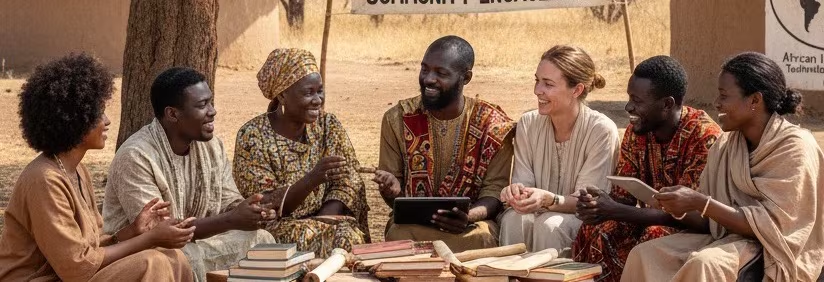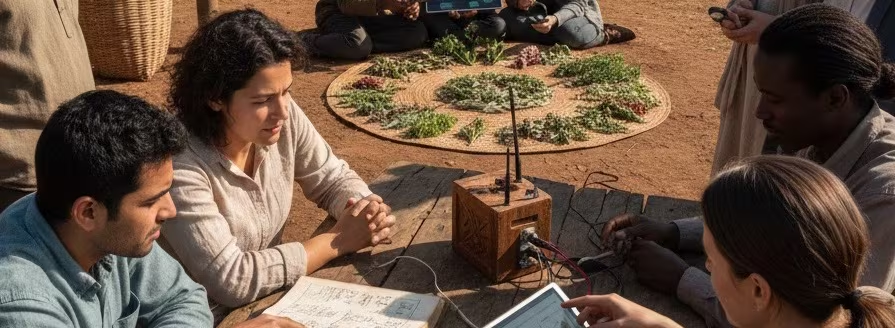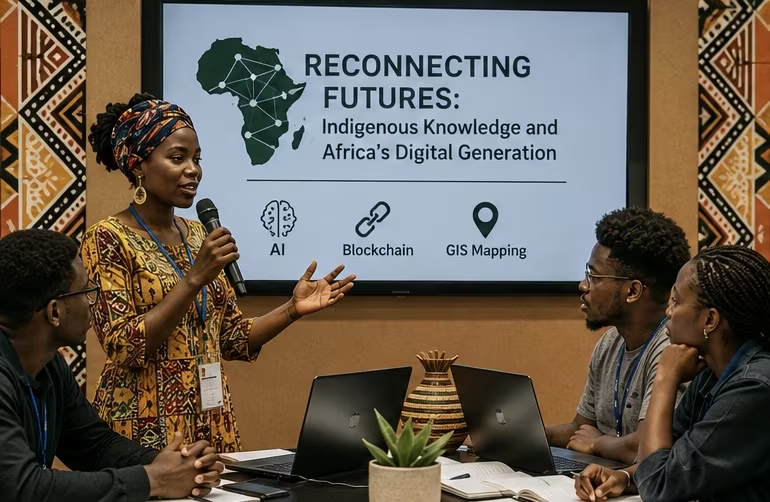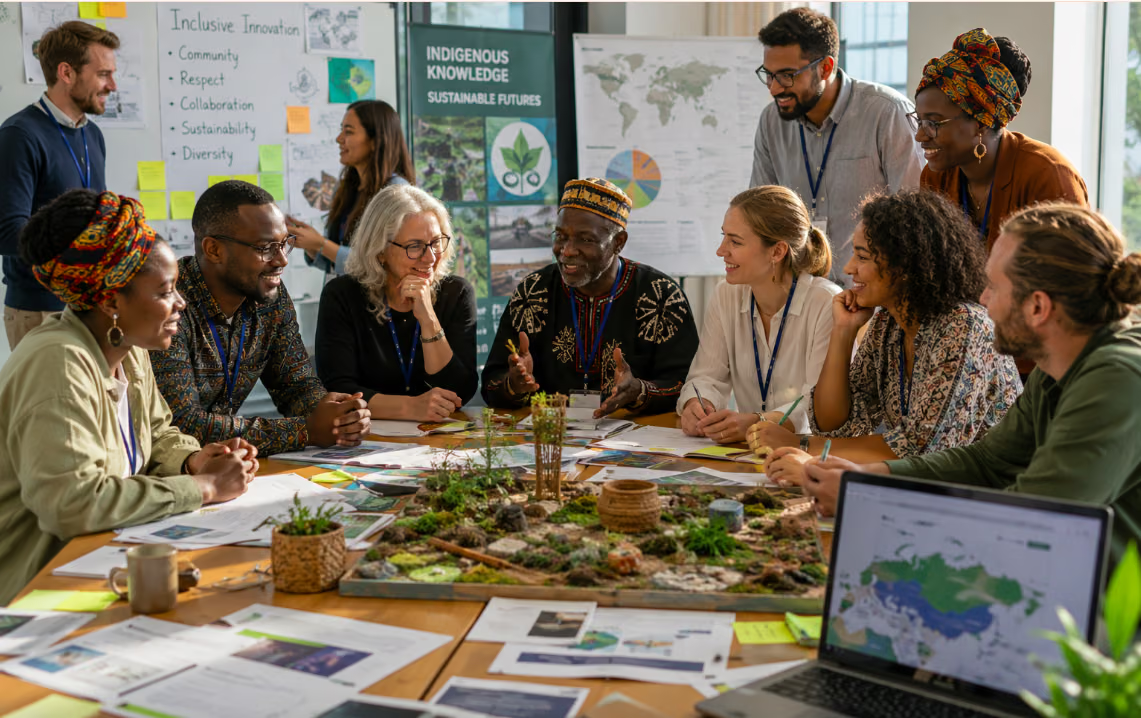
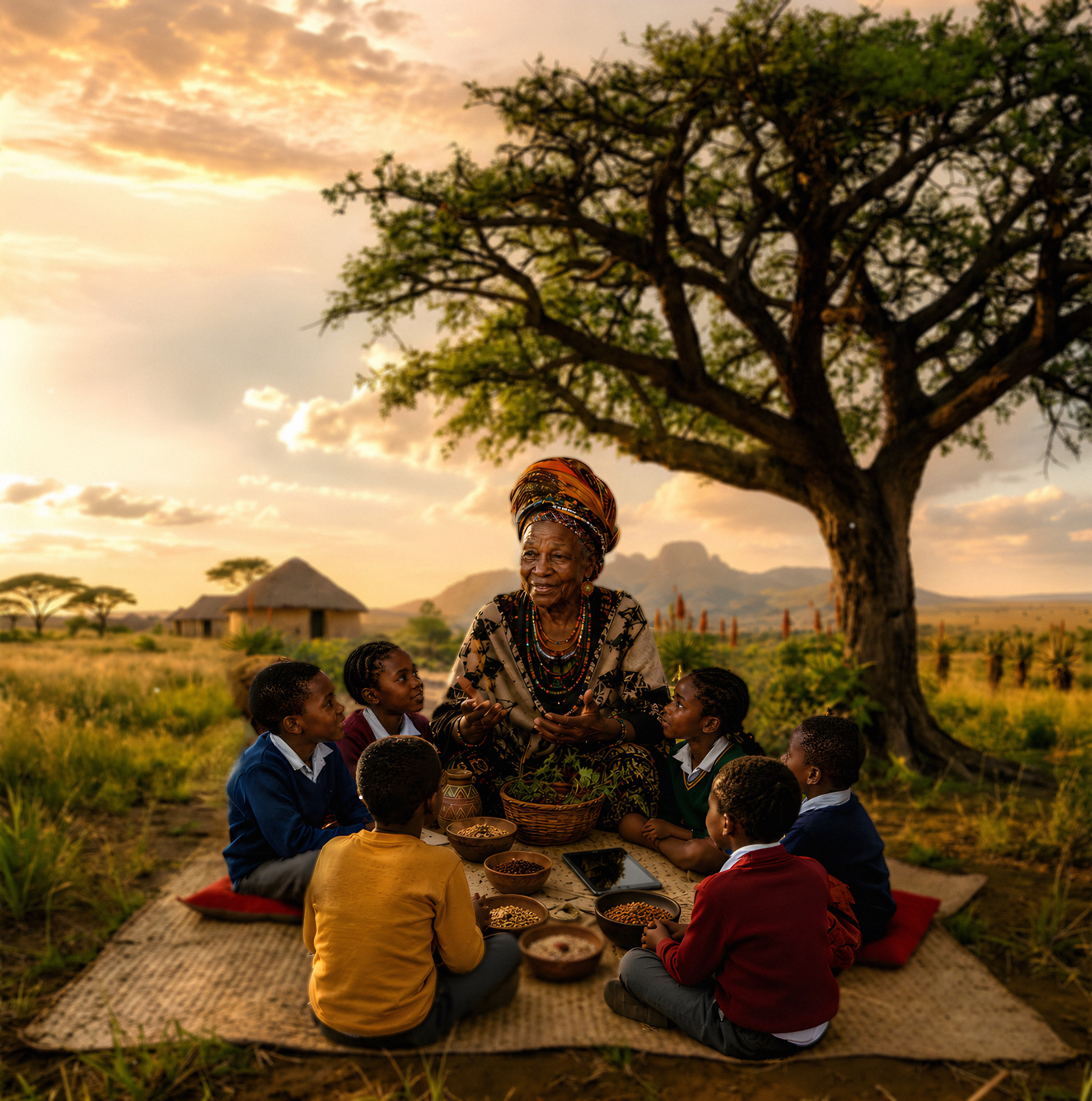
Elder African woman holding a digital tablet, bridging ancient wisdom and modern technology
UNESCO C2C

THE AFRICAN INSTITUTE IN INDIGENOUS KNOWLEDGE SYSTEMS (AIIKS)

A Living Laboratory

The African Institute in Indigenous Knowledge Systems (AIIKS), a UNESCO C2C, is a global consortium of over 30 higher education and autonomous research institutions across all African linguistic regions. Operating as a "Living Laboratory," it bridges ancient wisdom with modern inquiry to address challenges like climate resilience, health, and agriculture. Rather than viewing indigenous knowledge systems as relics, AIIKS treats them as dynamic ecosystems. Through collaborative research and intergenerational mentorship, the Institute validates community-based solutions within a modern framework. By driving socio-economic transformation and protecting intellectual heritage, AIIKS ensures African knowledge, technology and innovation systems, remain a resilient, self-sustaining force in the 21st century.

Institutional Framework

Advancing African Knowledge Systems Through Scholarship

"Integrating ancestral intelligence into the global knowledge economy to foster innovation and restore continental dignity."

Vision

To be the global epicentre of excellence in African Indigenous Knowledge Systems, where ancestral wisdom and modern innovation converge to drive sustainable, Afrocentric solutions for the challenges of the 21st century and beyond.

Mission

The African Institute in Indigenous Knowledge Systems (AIIKS) is dedicated to the restoration, protection, and advancement of Africa’s intellectual heritage. As a Living Laboratory, our mission is to:

Validate and Integrate: Bridge the gap between indigenous methodologies and contemporary science through rigorous, community-led research.

Empower Communities: Foster socio-economic transformation by supporting grassroots innovators and protecting the intellectual property of traditional knowledge holders.

Facilitate Intergenerational Exchange: Ensure the continuity of African wisdom by creating dynamic platforms for elders and youth to co-create knowledge.

Advocate for Sustainability: Promote indigenous ecological and social practices as essential tools for global climate resilience and peacebuilding.

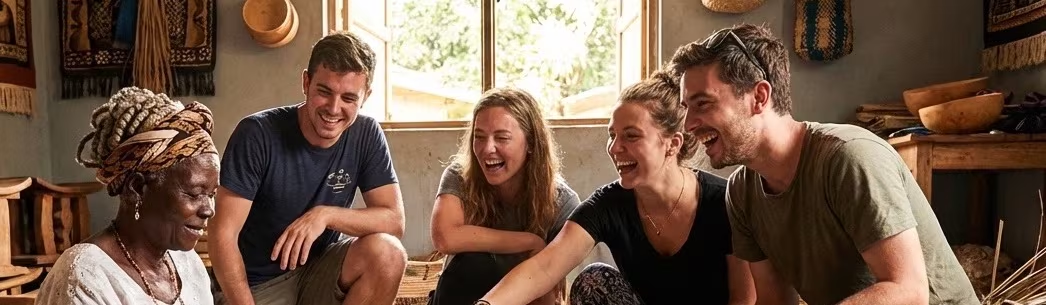
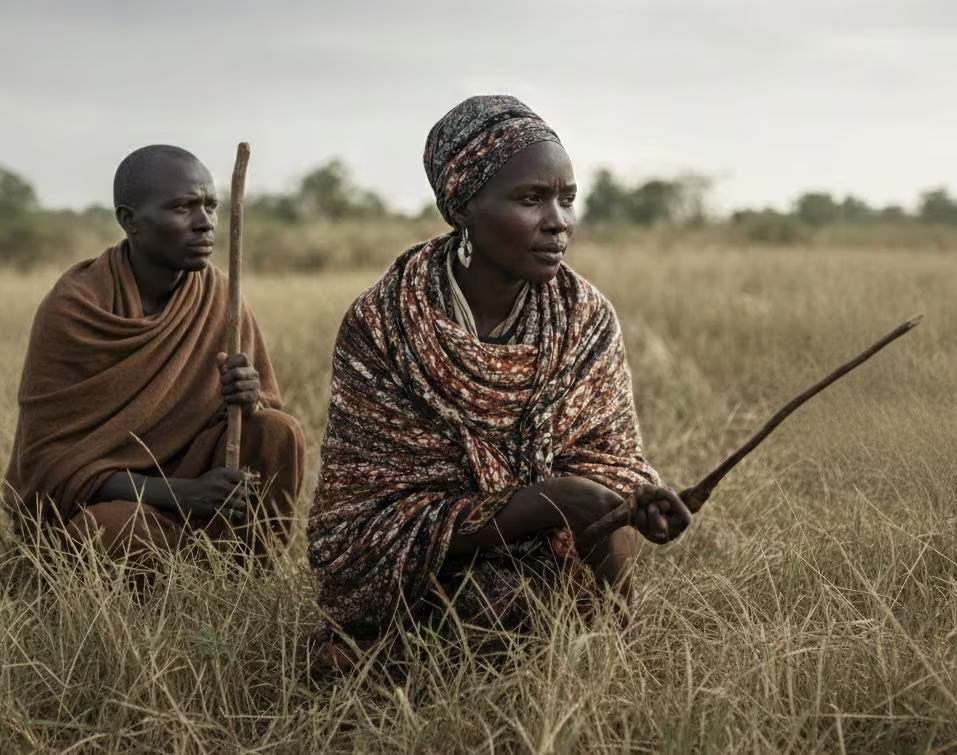
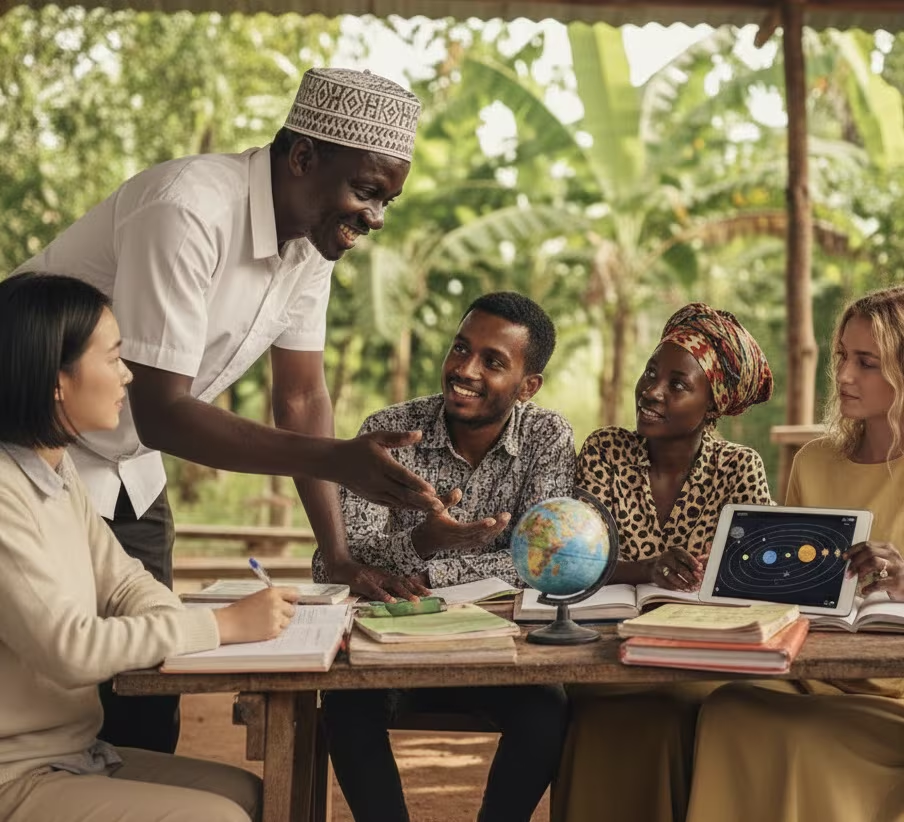
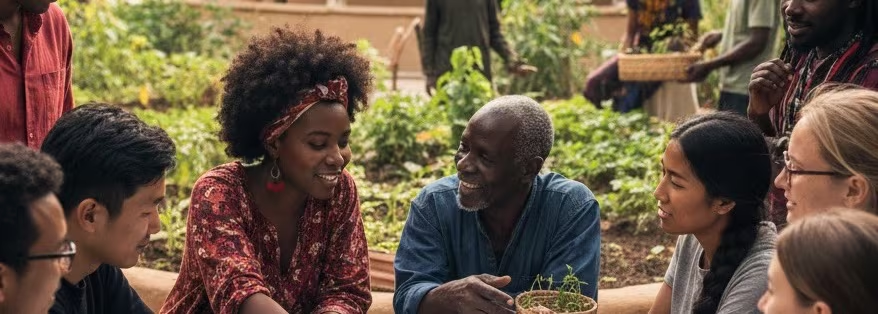
African elders and youth sharing wisdom — Core Values of AIIKS
Core Values

Our Guiding Principles

Afrocentricity: We place African worldviews, cultures, and experiences at the centre of our research and pedagogical frameworks, ensuring that solutions are born from the soil they are meant to serve.

Intergenerational Reciprocity: We honour the sacred bond between the wisdom of our elders and the energy of our youth, facilitating a continuous flow of knowledge that secures our heritage for future generations.

Ethical Stewardship: We are committed to the protection of Indigenous and local community-based Intellectual Property (IIP) and the ethical curation of indigenous and traditional knowledge systems, ensuring that local communities remain the primary beneficiaries of their own innovations.

Transdisciplinary Innovation: We break down the silos between "traditional/local" and "modern" sciences, fostering a collaborative environment where diverse knowledge systems work in harmony to solve complex global issues.

Communal Integrity (Ubuntu): We operate on the principle that our institutional success is inextricably linked to the well-being of the communities we serve. Our research is grounded in empathy, respect, and collective growth.

Ecological Harmony: We advocate for the indigenous and local community-based principle of living in balance with the natural world, promoting sustainable practices that respect the sanctity of the environment.

The Governance Structure and Terms of Reference (ToR)

AIIKS operates as a legally autonomous UNESCO Category 2 Centre through a decentralized "Hub and Nodes" model, coordinating over 30 global higher education and autonomous research institutions. Its governance ensures strategic alignment with international agendas while maintaining operational flexibility.

AIIKS Hub and Nodes Governance Network
Level 1

1. The Governing Board (Supreme Authority)

Composition:

Representatives from the South African government, UNESCO, and participating member states.

Terms of Reference:

  • Strategic Oversight: Approves multi-year plans aligned with UNESCO, AU Agenda 2063, and UN SDGs.
  • Fiduciary Responsibility: Reviews budgets and financial statements to ensure transparency for international donors.
  • Advocacy: Acts as global ambassadors to secure funding and political support.
  • Monitoring: Oversees high-level evaluation of the Institute’s impact.
Level 2

2. Executive Management Commitee & The Secretariat (The UKZN Hub)

Composition:

The Institute Director (Hub) and Node Coordinators (Executive Management Council).

Terms of Reference:

  • Operational Leadership: Bridges high-level policy with grassroots execution.
  • Fiduciary Management: UKZN serves as the agent managing separate accounts and audits.
  • Administrative Support: Provides central communication, legal contracting, and project management.
Level 3

3. National and International Nodes (Partner Institutions)

Composition:

Dedicated management teams at each partner university or research centre.

Terms of Reference:

  • Localized Implementation: Executes community-centred programs and "Signature Projects" (e.g., Traditional Medicine).
  • Knowledge Synthesis: Funnels grassroots research back to the Hub to maintain a unified "Living Laboratory."
  • Mentorship: Facilitates intergenerational dialogues and mentorship within their specific regions.

Swipe to explore the Governance Structure

The Evolution of AIIKS to UNESCO C2C:

Transformation Woven Through Time

The Evolution of AIIKS to UNESCO C2C

A Timeline of Transformation

The trajectory of the African Institute in Indigenous Knowledge Systems (AIIKS) is more than an academic timeline; it is a movement toward the cognitive justice of the African continent. From its humble beginnings as a pioneering degree to its status as a UNESCO Category 2 Centre, the journey reflects a systemic shift in how indigenous knowledge systems are governed, taught, and protected.

The Legacy of the Journey

Restoring the African Voice in the Global Knowledge Economy

The history of AIIKS is not just a record of administrative growth; it is the story of restoring the African voice in the global knowledge economy. By moving from a single university project to a UNESCO-mandated centre, AIIKS has ensured that African Indigenous Knowledge Systems is no longer viewed as "alternative" — but as a primary source of innovation for a sustainable future.

UNESCO Collaboration

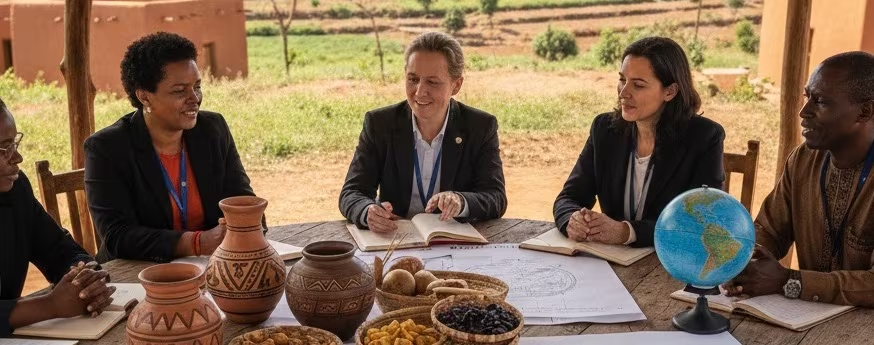
As a UNESCO Category 2 Centre (C2C), the African Institute in Indigenous Knowledge Systems (AIIKS) with its hub at the University of KwaZulu-Natal (South Africa), is strategically designed to function as an extension of UNESCO’s global mission. While legally autonomous, its mandate is bound to the achievement of UNESCO’s Medium-Term Strategy and the United Nations Sustainable Development Goals (SDGs).

The AIIKS aligns with key UNESCO mandates in the following ways:

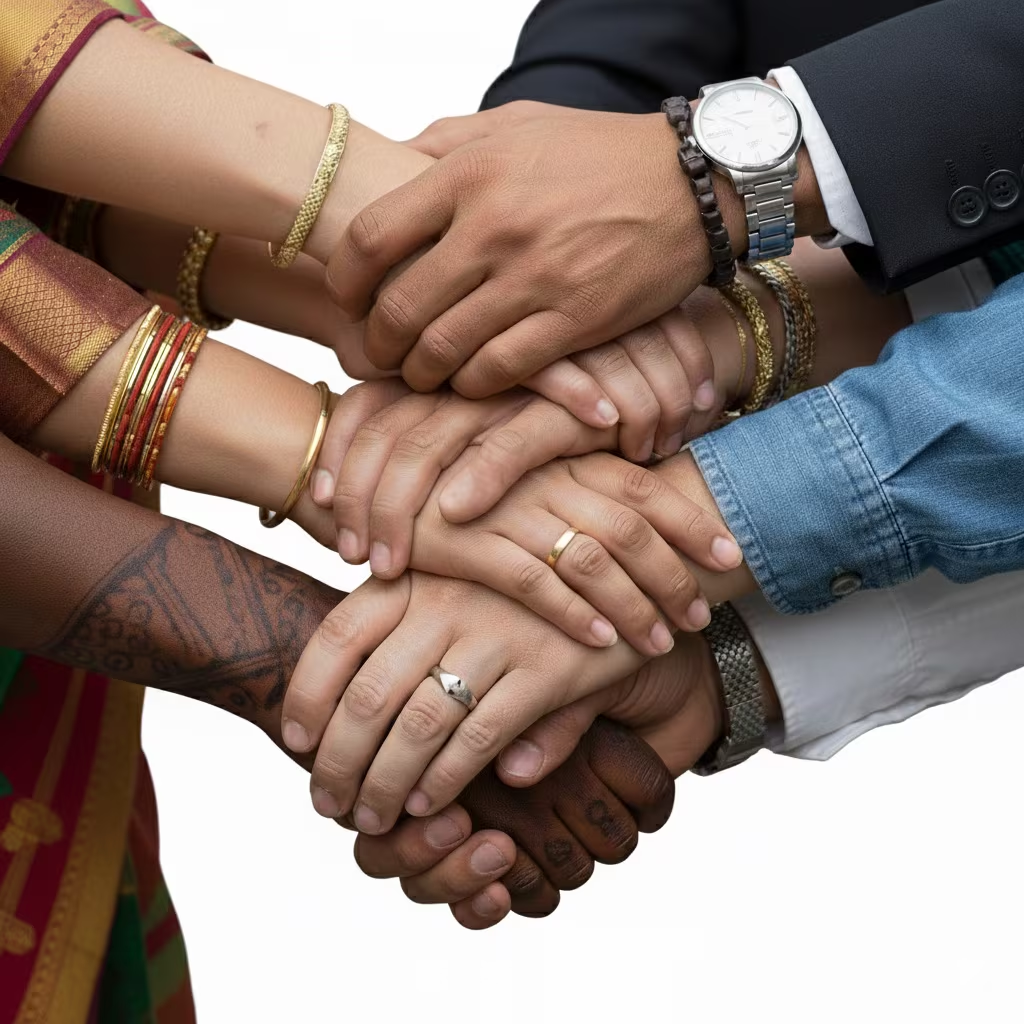
UNESCO and AIIKS collaboration — global indigenous knowledge partnership

1. Support for Global Priority Africa

AIIKS is a direct vehicle for UNESCO’s Operational Strategy for Priority Africa (2022–2029). By centering African worldviews and indigenous methodologies, the Institute supports the African Union’s Agenda 2063, specifically the aspiration for an Africa with a strong cultural identity and shared heritage. It transforms indigenous knowledge from a passive heritage into an active tool for continental socio-economic transformation.

2. Advancing UNESCO’s Medium-Term Strategy

The Institute contributes directly to UNESCO’s Strategic Objectives:

  • Education (SDG 4): Through its "Living Laboratory" model, AIIKS promotes inclusive education by integrating indigenous knowledge into higher education curricula and fostering intergenerational knowledge transfer.
  • Environmental Action (SDGs 13 & 15): By utilizing time-tested ecological practices, the Institute aligns with UNESCO’s mandate to protect biodiversity and enhance climate resilience through local and indigenous knowledge (LINKS).

3. Implementation of the 2003 Convention

AIIKS plays a critical role in the Convention for the Safeguarding of the Intangible Cultural Heritage. It doesn't just archive traditions; it ensures their viability by applying them to modern challenges in health, agriculture, and governance. This "living" application is the gold standard for safeguarding intangible heritage in the 21st century.

4. Science, Technology, and Innovation (STI)

Aligned with the UNESCO Recommendation on Open Science, AIIKS advocates for a more inclusive global knowledge system. It bridges the gap between "Western" and "Indigenous" sciences, ensuring that indigenous innovations are scientifically validated and ethically protected, thereby democratizing the global innovation landscape.

5. Ethics of Knowledge and AI

As UNESCO leads global dialogues on the Ethics of Artificial Intelligence and science, AIIKS ensures that African ethical frameworks (such as Ubuntu) are represented. The Institute’s focus on Ethical Stewardship protects the intellectual property of local communities against exploitation, aligning with UNESCO’s commitment to social justice and human rights.

Swipe to explore UNESCO Alignment

Youth & Innovation

A Powerhouse for A Global
Youth-Led Movement

The African Institute in Indigenous Knowledge Systems (AIIKS), as a UNESCO Category 2 Centre, has evolved into a powerhouse for a global youth-led movement. It positions the next generation of African leaders not merely as beneficiaries, but as the primary architects of a future where frontier and digital technologies harmonize with indigenous knowledge.

By integrating these diverse systems, AIIKS addresses the complexities of the 21st century through three primary lenses:

Lens 1

The Digital-Indigenous Interface

AIIKS empowers youth to leverage Science, Technology, and Innovation (STI) alongside indigenous languages and home-grown philosophies (such as Ubuntu).

Frontier Technologies: Youth use AI and data science to digitize oral histories and map biocultural, linguistic, spiritual resource diversity, ensuring that "modern" tools speak the "languages" of the community.

Epistemic Justice: By treating indigenous knowledge systems as a science in its own merit, the movement challenges Western-centric narratives, reclaiming African intellectual heritage in the digital age.

Lens 2

Promoting Just Transitions and Governance

AIIKS advocates for a just transition that is inclusive and culturally grounded.

Climate & Environmental Justice: Youth-led research applies time-tested ecological practices to modern climate adaptation, ensuring that environmental solutions do not displace or marginalize local communities.

Inclusive Governance: By rooting governance in indigenous ethical frameworks, AIIKS promotes a model of leadership that is transparent, communal, and responsive to the social needs of the marginalized.

Lens 3

Peacebuilding and Security

AIIKS recognizes that inclusive and sustainable peace requires more than just high-level diplomacy; it requires the wisdom of the soil.

Conflict Resolution: Through research and community engagement, young practitioners revive indigenous peacebuilding methodologies to resolve modern intra-continental disputes.

Human Capital Development: The Institute invests in the "youth-elder" bond, facilitating mentorship that transforms ancient mediation tactics into scalable modern security strategies.

Lens 4

Regenerative Cultural Tourism

The AIIKS UNESCO C2C shifts the tourism paradigm from an extractive industry to a regenerative ecosystem, positioning African Indigenous Knowledge Systems as a living, evolving force for community empowerment.

DimensionOld ModelAIKS Model
CapitalProfits exitReinvested locally
CultureStaticLiving ecosystem
AgencyLabourIP ownership
LegacyErosion riskPreserved

Swipe to explore the Lenses

AIIKS Impact Pillars

Pillar Focus Area Goal
ResearchTransdisciplinary InquiryValidating indigenous science, technology and innovation systems through digital tools.
Human CapitalMentorship & TrainingEquipping youth with both tech skills and cultural wisdom.
Community EngagementGrassroots ActionApplying "Living Laboratory" solutions to local challenges.
How We Operate

AIIKS Programmatic Frameworks

The African Institute in Indigenous Knowledge Systems (AIIKS) operationalizes its mission through specialized programmatic frameworks. By anchoring its activities in research, human capital development, and community engagement, the Institute transforms African Indigenous Science, Technology, and Innovation (AISTI) from a marginalized heritage into a primary driver of global inclusive sustainable development and epistemic justice.

AIIKS Programmatic Frameworks — Research, Human Capital, Community

Framework 1

Research: Decolonizing and Systematizing AISTI

Research at AIIKS is not a passive observation but a transdisciplinary intervention aimed at epistemic justice.

Scientific Validation & Innovation

The Institute uses modern scientific protocols to validate indigenous medical, agricultural, and ecological practices. This includes high-tech laboratory analysis of medicinal plants and the use of AI for pattern recognition in traditional ecological knowledge and innovation systems.

Signature Research Projects

Health

Developing regulatory-compliant African natural medicines and nutraceuticals.

Agriculture

Systematizing indigenous seed-saving and climate-resilient farming techniques.

Frontier Tech

Creating digital libraries and using blockchain to protect communal intellectual property.

Framework 2

Human Capital Development: Building a Critical Mass of Experts

AIIKS prioritizes the creation of a new generation of African scholars and practitioners who are "bi-literate" in both Western and Indigenous science, technology and innovation systems.

Intergenerational Mentorship

Facilitating a sacred flow of knowledge, technology and innovation systems where youth leverage digital tools (like GIS mapping or mobile apps) to document and scale the wisdom of elders and other local community-based knowledge holders and practitioners.

Accredited Education

Through partners like the University of KwaZulu-Natal, North-West University, and University of Venda in South Africa, AIIKS supports the Postgraduate Diploma in African Indigenous Knowledge Systems (PGDAIKS), Bachelor of Indigenous Knowledge Systems (BIKS) and postgraduate research that integrates home-grown philosophies (like Ubuntu) into formal curricula.

Youth-Led Innovation Hubs

Equipping young entrepreneurs with the skills to turn indigenous innovations into viable green start-ups and social enterprises.

Framework 3

Community Engagement: The "Living Laboratory" Model

The Institute rejects the "ivory tower" approach, ensuring that research remains rooted in the soil of local communities.

Living Laboratories

These are sites of active experimentation where scholars from within and outside Africa engage with local knowledge-holders and practitioners to co-create inclusive and sustainable solutions.

Smart Village Initiatives

Implementing Smart Village initiatives in AIIKS partner countries that integrate 4IR technologies with traditional governance and sustainable architecture:

South Africa

CSIR Smart Village Pilot

Partner: AIIKS Hub

High-speed connectivity, off-grid energy, and digital platforms for small-scale farmers.

Ha-Makuya Smart Village

Environmental sustainability, eco-tourism, and Venda indigenous knowledge.

Rwanda

FAO Digital Villages (FDiVi)

Partner: University of Rwanda

Precision agriculture, market access, and empowerment of youth/women in Musanze.

Smart Africa Blueprint

Integration of e-health and e-education services into rural settings.

Kenya

Konza Smart County

Partner: AIIKS Partner

Livestock tracking and water management via rural technological outreach.

M-KOPA Solar Model

Pay-as-you-go solar for digital learning and remote irrigation.

Zimbabwe

FDiVi (FAO Partnership)

Partner: AIIKS Partner

Digitalizing production and marketing systems for rural farmers.

Innovation Hubs (GZU)

Heritage-based smart tourism through the integration of AI and IKS.

Senegal

Groundnut Basin Project

Partner: Université Cheikh Anta Diop

Blending traditional and satellite data for weather forecasts and market pricing.

Diamniadio Outreach

Extending e-governance and digital services to fishing and farming villages.

Uganda

Batwa Digital Empowerment

Partner: Makerere / Kyambogo University

GIS mapping and digital storytelling for indigenous knowledge and tourism.

Smart Africa Pilots

Solar-powered internet connectivity for rural health centres.

Real Impact

AIIKS Global Transformative Impact Spotlights

As a UNESCO Category 2 Centre (C2C), AIIKS is more than a research body; it is a global beacon for cognitive justice, rectifying epistemic injustice by positioning African indigenous wisdom as a primary driver of modern science, technology, and innovation.

Impact Spotlight 1

Research: Rectifying Epistemic Injustice

AIIKS serves as a catalyst for transdisciplinary research that challenges the historical marginalization of African wisdom. By integrating Indigenous Knowledge Systems (IKS) into global scientific agendas, the Institute proves that ancient traditions hold the keys to modern challenges.

Global Health Innovation

In collaboration with Akkon University (Germany) and national partners like the University of Limpopo, AIIKS has developed plant-based nanoparticle drug delivery systems and standardized anti-malarial treatments. This work validates traditional medicine as a cornerstone of modern pharmacology.

Climate Adaptation & Disaster Risk Reduction

Through a strategic alliance with UNDRR and funding from UK DEFRA and JNCC, the Institute developed Hybrid Flood Risk Reduction Models. These models synthesize indigenous early warning signs with satellite data, providing a blueprint for the SADC Regional Resilience Strategy.

Innovation & Evidence

Supported by the IDRC (International Development Research Centre), AIIKS promotes research that ensures indigenous methodologies are evidence-based and globally competitive.

Impact Spotlight 2

Human Capital Development: Cultivating Afrocentric Scholars

The Institute is committed to building a "critical mass" of scholars and practitioners who are fluent in both indigenous worldviews and modern research methodologies.

Decolonizing Higher Education

Through partnerships with North-West University (NWU), UNISA, and the University of Venda, AIIKS has established accredited Bachelor's, Master's, and PhD programs. This curriculum shifts the focus from "studying" indigenous people to "learning from" them.

Global Skills Exchange

To prepare the next generation for a digital future, the AIIKS Innovation Hub facilitates internships and skills transfers with high-tech hubs in China, South Korea, India, and Japan. These programs ensure that African youth can apply indigenous logic to emerging technologies like AI and digital media.

Youth Empowerment

Working closely with the National Youth Development Agency (NYDA), AIIKS ensures that IKS-based entrepreneurship is a viable career path for young Africans, fostering "Digital Sovereignty."

Impact Spotlight 3

Community Engagement: From Grassroots to Global Impact

At its core, AIIKS is a vehicle for socio-economic transformation, ensuring that the intellectual property of African communities is protected and commercialized for their own benefit.

Economic Empowerment & Green Economy

In partnership with the African Centre for a Green Economy (AFRICGE), AIIKS assists communities in commercializing traditional products — from herbal remedies to cosmetics — while safeguarding against biopiracy.

Traditional Leadership & Cultural Continuity

By engaging directly with Traditional Leadership, the Institute facilitates "Intergenerational Dialogues." This creates a bridge between elders and youth, formalizing the transfer of knowledge in sectors like pottery and basketry to ensure they remain viable livelihoods.

The Africa Forum

This platform serves as a primary space for policy advocacy, aligning indigenous innovations with AU Agenda 2063 and the UN Sustainable Development Goals (SDGs).

Impact Spotlight 4

Strategic Partner Network & Global Significance

Operating through a sophisticated "Hub and Nodes" model — with the University of KwaZulu-Natal (UKZN), South Africa, as its central secretariat — AIIKS orchestrates a global consortium of over 30 nodes to ensure that the "Living Legacy" of Africa is preserved, protected, and propelled into the future.

CategoryKey InstitutionSignificance
Global GovernanceUNESCOValidates IKS as a formal science; establishes international IP frameworks.
Continental LeadershipAfrican UnionAligns IKS with Agenda 2063 for industrialization and Pan-African identity.
Risk & ResilienceUNDRR & IDRCScales indigenous ecological knowledge for disaster risk reduction and climate funding.
Academic HubUKZNCentral Secretariat providing infrastructure for a 30-node global consortium.
Economic DevNYDA & AFRICGEBridges the gap between grassroots innovation and the modern Green Economy.
HeritageUniv. Dar es SalaamPreserves indigenous languages (e.g., Kiswahili) as vehicles for scientific thought.
Global TechHigh-Tech Hubs (Asia)Applies indigenous logic to AI, digital innovation, and high-tech manufacturing.

Swipe to explore the Impact Spotlights

Core Mission

A Bicultural Revolution

AIIKS believes the solutions to global climate, health, and social crises lie at the intersection of Indigenous Knowledge Systems (IKS) and high-tech tools like AI, Blockchain, and Big Data.

Strategic Pillars for Action

01

Frontier Research &
Digital Integration

  • Climate & DRR: Scaling drought-resistant techniques via digital modelling.
  • ATM Value Chains: Utilizing Blockchain for transparent sourcing of African Traditional Medicine.
  • Data Sovereignty: Developing ethical AI to protect community intellectual property.
  • Ancestral Science: Exploring the biomechanics of traditional textiles and sustainable architecture.
02

Human Capital &
Skill Capacity

  • Youth Internships: Hands-on experience in decolonizing curricula.
  • Green Entrepreneurship: Transforming traditional crafts and foods into scalable "green" enterprises.
  • Digital Literacy: Bringing high-tech skills directly to local knowledge holders.
03

Community
Engagement

  • Participatory Action Research: Elders and practitioners as co-researchers.
  • Inclusive Tech: Developing sign language tools and digital accessibility for vulnerable groups.
  • Cultural Revitalization: Using digital supply chains to protect "lost" crops and traditional music.
Comparative Analysis

The Paradigm Shift

AIIKS represents a fundamental departure from conventional approaches, prioritizing holistic and communal wisdom.

Feature Indigenous Knowledge (AIIKS) Conventional Western Systems
PerspectiveHolistic (Human, Nature, Spirit)Reductionist (Segmented disciplines)
SustainabilityCircular & Community-basedResource-intensive & Growth-focused
OwnershipCommunal / CollectiveIndividual Intellectual Property
TransmissionOral Tradition & Digital PreservationFormal Schooling & Written Text
Why Join Us

The "AIIKS Advantage"

The African Institute in Indigenous Knowledge Systems (AIIKS) isn't offering a standard partnership; it's inviting you into a transformative ecosystem where ancient wisdom meets global strategy. Whether you are a student organization seeking purpose, a researcher exploring "Indigenous Tech," or a development agency pursuing sustainable impact, the AIIKS Advantage provides the foundation to turn vision into reality.

Advantage 1

Global Validation: The UNESCO C2C Mandate

Partners do not work in isolation; they operate under the prestigious mandate of a UNESCO Category 2 Centre (C2C). This affiliation offers:

International Prestige: Immediate alignment with United Nations standards for cultural preservation and sustainable development.

Ethical Legitimacy: A rigorous framework ensuring all research involving indigenous communities meets the highest ethical standards, providing a bulletproof defence against biopiracy and cultural appropriation.

A "Seal of Excellence": Enhancing project credibility for global funding, academic publication, and international recognition.

Advantage 2

Access to Unique Data: Tapping the "Silent Archives"

AIIKS serves as the ultimate gateway to the largest repository of African indigenous intelligence — data that is often invisible to the Western world.

30+ Strategic Nodes: Direct access to a decentralized network of research hubs across the African continent.

The "Grey Literature" Goldmine: Exclusive access to unpublished reports, oral histories, and community-held knowledge.

Primary Indigenous Data: Work with raw, community-validated data on everything from ancestral pharmacology to climate resilience, giving your research a definitive competitive edge.

Advantage 3

Policy Influence: From Local Impact to Global Frameworks

At AIIKS, your contributions don't sit on a shelf. They move through the corridors of power to shape the future of the planet.

Regional Integration: Your research and innovations are directly integrated into SADC (Southern African Development Community) and African Union (AU) policy frameworks.

Global Advocacy: Partners have a direct line to influence United Nations agendas, including the Sustainable Development Goals (SDGs) and the IPCC.

Scalable Solutions: Transition from localized community projects to continental policy standards, ensuring your work has a lasting, systemic impact.

Advantage 4

Community Connection: The "Gatekeeper" Advantage

The greatest barrier to indigenous research is a lack of trust. AIIKS removes this barrier through established, high-trust relationships.

Traditional Leadership Synergy: We work directly with Traditional Kings, Queens, and Village Elders — the true custodians of indigenous innovation systems.

Social License to Operate: By joining AIIKS, you inherit the "social license" required to navigate sensitive rural landscapes ethically and effectively.

Direct-to-Community Pipelines: Bypass bureaucratic red tape. Implement technology and development programs exactly where they are needed, ensuring high adoption rates and true local ownership.

Swipe to explore the AIIKS Advantage

Global Call to Action

How You Can Contribute

To achieve the vision of the African Institute in Indigenous Knowledge Systems (AIIKS), our consortium relies on a "Synergy of Diversity." We invite a wide array of global partners — from tech-savvy youth to high-level development agencies — to build a multi-layered support system where every stakeholder fills a specific gap in the value chain.

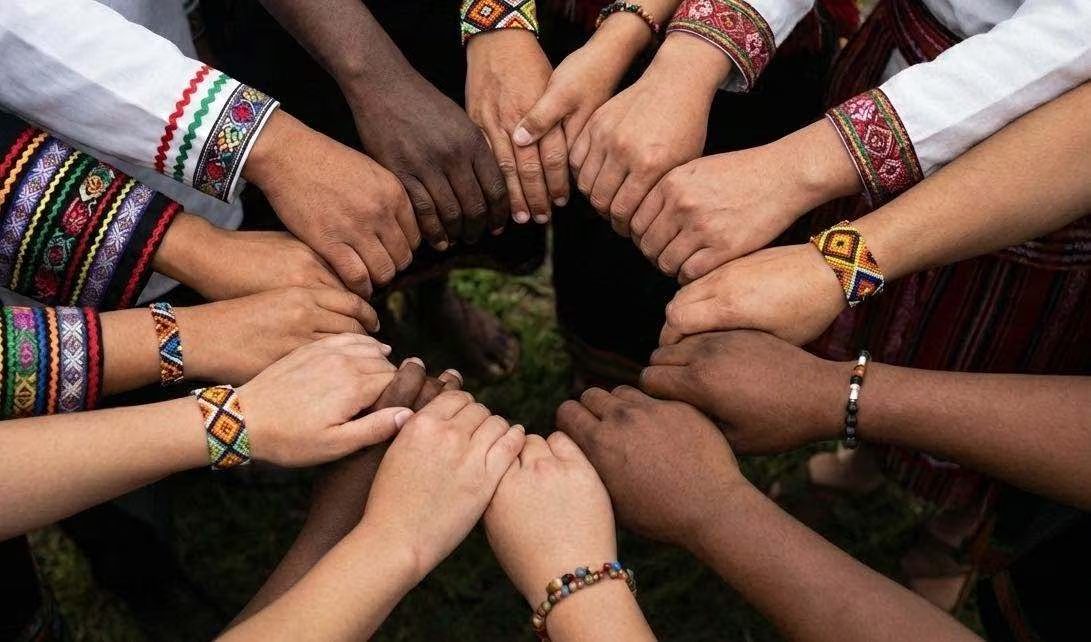
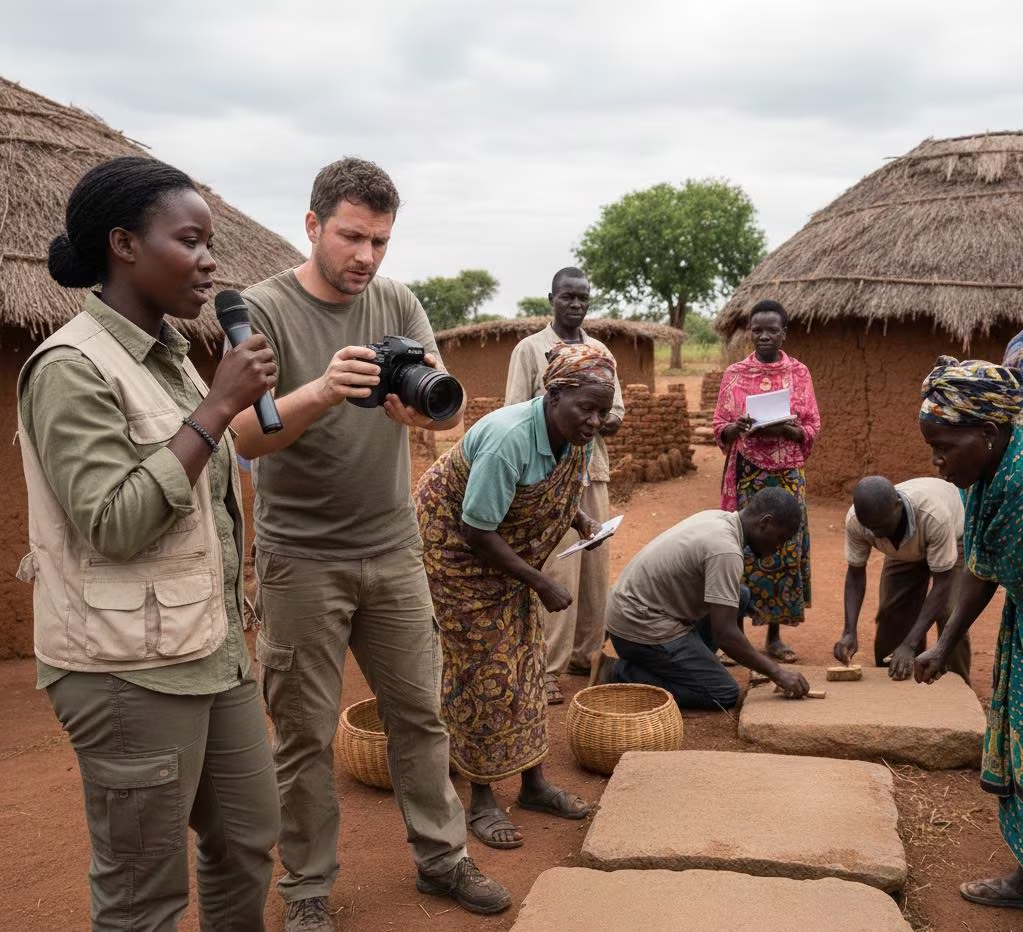
African youth and students bridging digital tools with indigenous knowledge
Youth & Students

Contributor Type 1

Global Youth & Students: The "Digital Bridge"

Youth and student organizations are the primary engines of Human Capital Development and Frontier Technology integration.

Reverse Mentorship: While elders hold the indigenous wisdom, youth provide the "Digital Literacy" needed to document it. They contribute by building apps for traditional weather forecasting or using social media to market indigenous crafts.

Agile Research: Students (Master's and PhD) provide the "research muscle" to conduct field studies, turning oral traditions into peer-reviewed "Grey Literature" for policy advocacy.

Youth-Led Innovation: Through AIIKS internships, students apply modern biomechanics to ancestral crafts — such as the "Stitched in Heritage" project — modernizing indigenous science without erasing its roots.

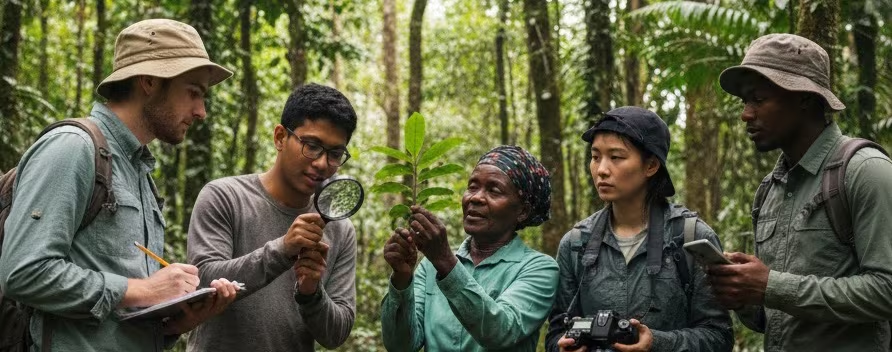
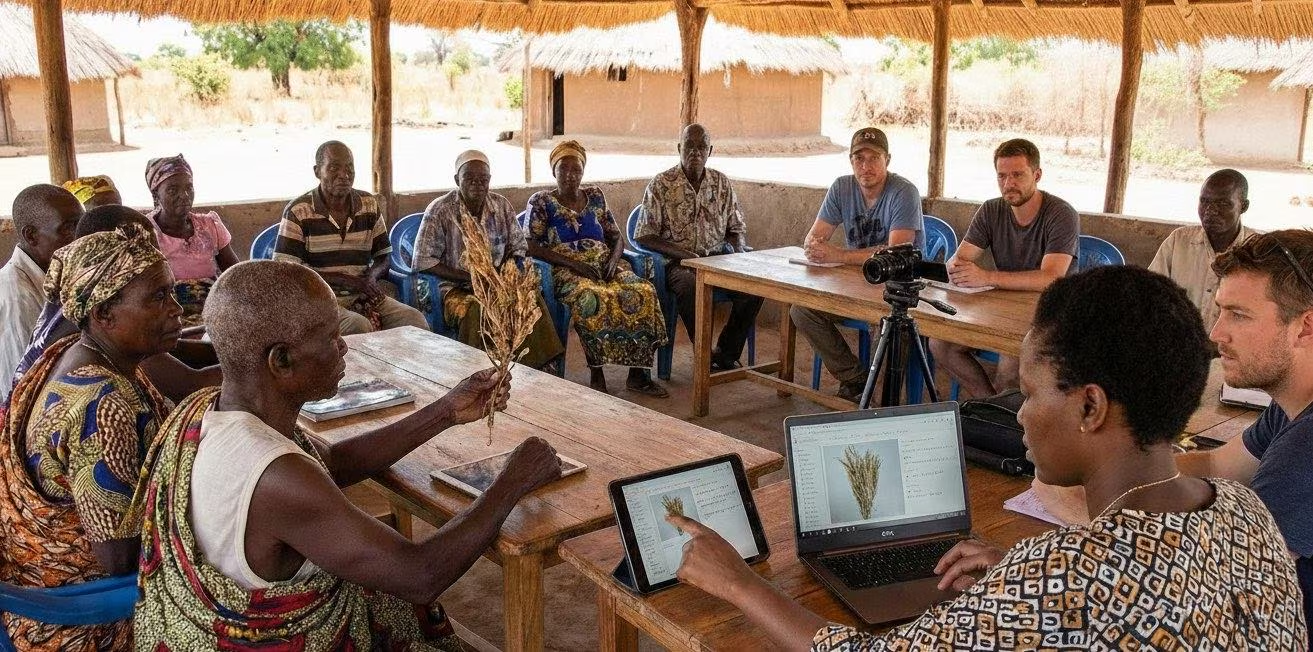
African community-based researchers and indigenous knowledge custodians
Custodians

Contributor Type 2

Indigenous & Community-Based Researchers: The "Custodians"

These partners ensure that research remains Ethically Grounded and Culturally Authentic.

Validation of Data: They act as "Internal Peer Reviewers," ensuring digital representations of IKS are accurate and respect sacred protocols.

Language Sovereignty: They translate complex scientific concepts into indigenous languages, ensuring local communities are active participants in Curriculum Decolonization.

Early Warning Systems: By documenting local biological indicators (bird migrations, plant flowering), they provide the primary data for the AIIKS Climate Change and DRR strategic pillar.

Technology and innovation researchers using AI and digital tools
Scalability Experts

Contributor Type 3

Tech & Innovation Systems Researchers: The "Scalability Experts"

These partners provide the tools to take local solutions to a global market.

Data Sovereignty & Blockchain: They build secure digital vaults for IKS, using blockchain to ensure that if traditional medicine is commercialized, royalties flow back to the rural community (e.g., in Limpopo or Mpumalanga).

AI & Big Data: They analyse massive indigenous datasets to find patterns in traditional healing (The ATM Value Chain) that lead to global wellness breakthroughs.

Green Tech Infrastructure: They design low-carbon, community-based energy and water systems that align with indigenous sustainability values.

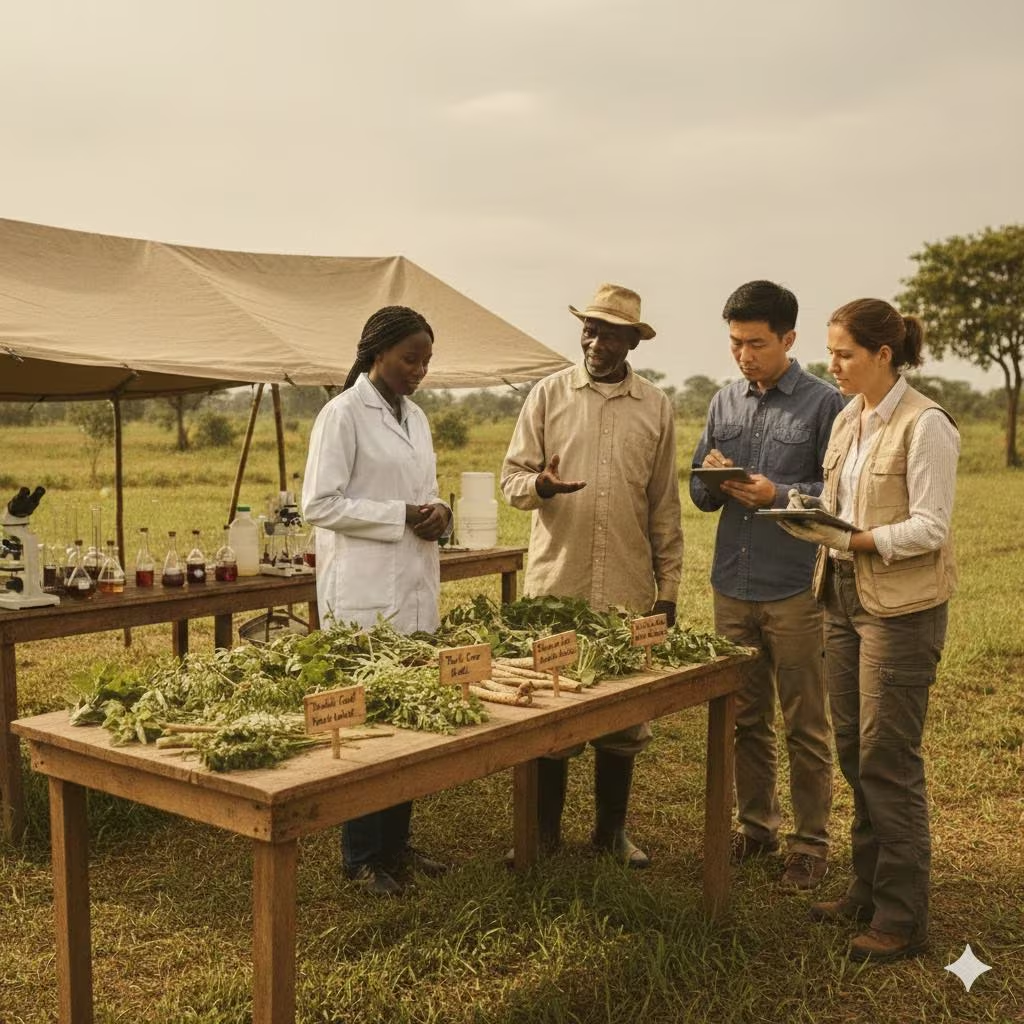
Development agencies and global organizations partnering with AIIKS
Strategic Accelerators

Contributor Type 4

Development Agencies & Global Organizations: The "Strategic Accelerators"

Agencies like UNESCO, the AU, and the UN provide Institutional Weight and Funding Pathways.

Policy Integration: They embed AIIKS findings into SADC or African Union "Green Economy" frameworks, ensuring long-term political support.

Market Access: They create "Export Corridors" for indigenous products, ensuring rural women entrepreneurs have access to international fair-trade markets for pottery, textiles, and organic foods.

Resource Mobilization: They provide the "Catalytic Capital" needed to scale AIIKS from 30 nodes to a pan-African network.

Swipe to explore how you can contribute

A Circular Knowledge Ecosystem

In this model, the Local Community provides the Seed (Knowledge), the Youth/Students provide the Water (Digital Tools), the Tech/Researchers provide the Sun (Validation/Scaling), and the Agencies provide the Soil (Policy/Funding).

The result is a self-sustaining ecosystem of Ancestral Innovation.

Seed (Knowledge)
+
Water (Digital Tools)
+
Sun (Validation)
+
Soil (Policy/Funding)
=
Ancestral Innovation

The "Living Laboratory" Concept

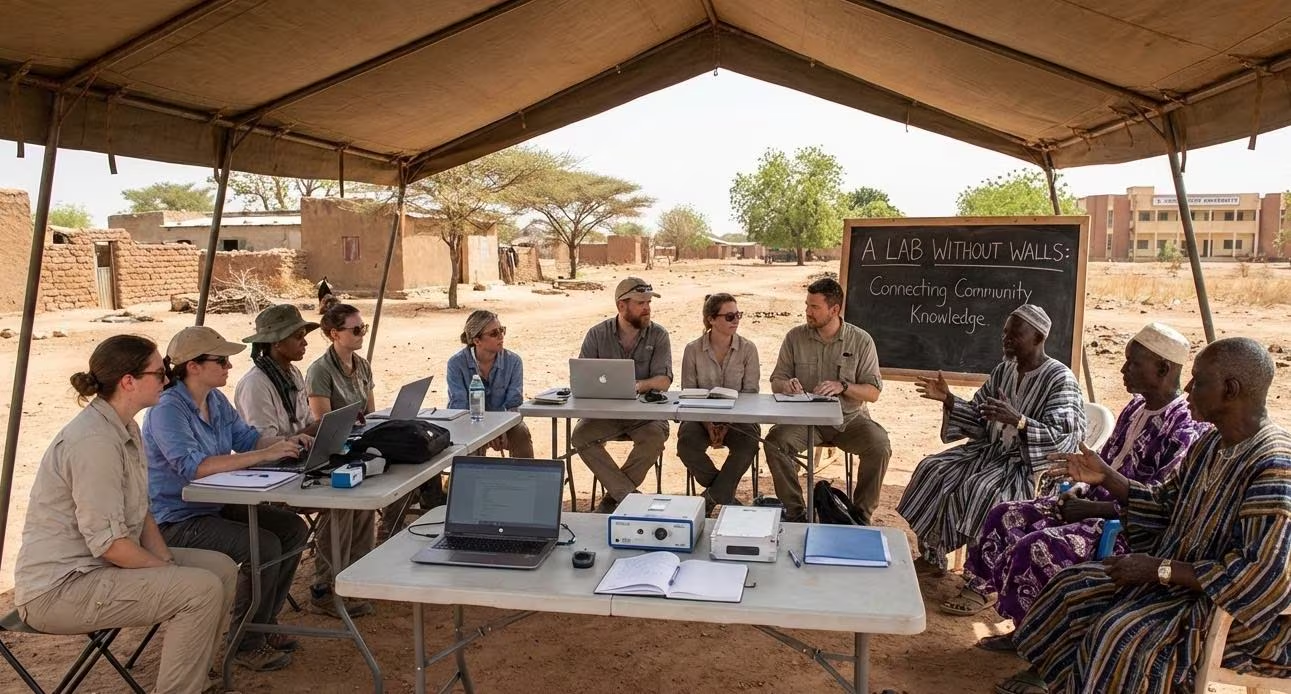
A "Living Lab" isn't a building with four walls—it is a community. It is where modern scientists and traditional elders work together as equals to solve real-world problems.

The Network

A Lab Without Walls

We connect over 30 research centers. Instead of staying in an office, our researchers go into the fields and villages to work directly with the people who hold ancestral knowledge.

What we do:

  • • Connecting 30+ Universities
  • • Community-led research
  • • Solving local problems on-site
Climate Lab

Nature's "Big Data"

We study how elders use the stars, plants, and animal behavior to predict the weather. We combine this "Climate Intelligence" with modern tech to help farmers grow food safely.

What we do:

  • • Early warning systems for drought
  • • Traditional farming
  • • Modern weather sensors
Medicine Lab

Ancient Healing, Modern Labs

We take traditional herbal medicines and test them in professional labs. This makes sure they are safe, effective, and ready to be used by the public as modern healthcare solutions.

What we do:

  • • Clinical testing of herbs
  • • Safety and dose standards
  • • Supporting traditional healers
Digital Protection

Protecting African Ideas

When African knowledge is shared, it is often stolen (biopiracy). We use digital tools to record and protect these ideas so the original owners get the credit and benefits.

What we do:

  • • Stopping "Knowledge Theft"
  • • Secure digital archives
  • • Intellectual Property laws
Cultural Lab

Languages & Oral History

African wisdom is often hidden in local languages and stories. We record elders and archive rare dialects to ensure that Africa's history remains a scientific resource for the future.

What we do:

  • • Recording oral traditions
  • • Preserving local languages
  • • Cultural heritage mapping
Youth Empowerment

Training the Next Generation

We teach young African students and researchers to value their own heritage. We bridge the gap between "Western" science and "Indigenous" wisdom to restore African dignity.

What we do:

  • • Youth education & training
  • • Restoring African Scholarship
  • • Building future scientists

Swipe to explore the Living Labs

Stay Updated

Latest News

Discover the latest developments in indigenous knowledge research, community partnerships, and groundbreaking discoveries from AIIKS.

Stay Connected

AIIKS Global Hub

Transforming Knowledge Systems

Get In Touch

Join Our Mission

Whether you're a researcher, community leader, or simply passionate about preserving indigenous knowledge, we'd love to hear from you.

54 University Road, Block B Library, IKS Ground Level, University of KwaZulu-Natal, Westville Campus Click to view map

Send us a message

Message Sent!

Thank you for reaching out. Our team will review your inquiry and respond shortly.

Stay updated with AIIKS research.

Join our mailing list for the latest indigenous knowledge systems publications and events.